India–Maldives trade records threefold growth over eight years, exports and tourism drive ties

Bilateral trade between India and the Maldives has recorded a remarkable threefold increase over the past eight years, underscoring the deepening economic interdependence between the two Indian Ocean neighbours. India’s exports to the Maldives have doubled to $680 million in FY 2024–25, while imports from the island nation have surged nearly 20 times to $119 million, according to official data.
The sharp rise in trade coincides with expanding people-to-people ties, particularly through tourism, and reflects a broader transformation in India–Maldives relations from traditional neighbourly engagement into a multi-dimensional strategic and economic partnership.
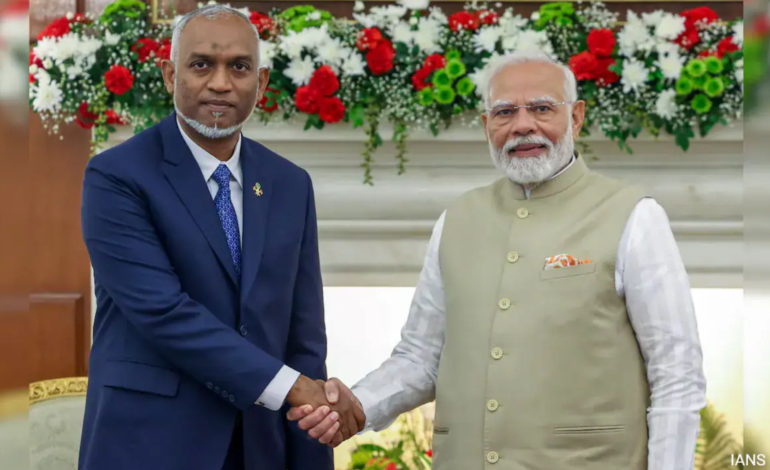
The momentum has been reinforced recently following Prime Minister Narendra Modi’s visit to the Maldives, during which eight major bilateral agreements were signed. These agreements aim to strengthen economic cooperation, infrastructure development, digital connectivity, and long-term financial sustainability for the Maldives.
Among the key outcomes was debt relief that will reduce the Maldives’ annual repayment burden by nearly 40 per cent, along with a $565 million Line of Credit from India for critical infrastructure projects. Other agreements include UPI–RuPay digital payment integration, cooperation in the fisheries sector, housing and urban development projects, enhanced security collaboration, climate resilience initiatives, and the advancement of talks on a Free Trade Agreement (FTA) and a Bilateral Investment Treaty (BIT).
According to an analysis published by the Maldives Insight news portal, India’s exports play a vital role in meeting the economic and daily consumption needs of the Maldives. Major export categories include petroleum products, pharmaceuticals, rice, fruits, vegetables, as well as machinery, electrical equipment, and transport vehicles. These goods are essential for sustaining the Maldives’ economy, which relies heavily on imports due to limited domestic production capacity.
Although smaller in absolute value, India’s imports from the Maldives are strategically important. These primarily consist of fish and marine products, supporting livelihoods in the Maldives’ fisheries sector and reinforcing supply-chain linkages across the Indian Ocean region.
Tourism remains one of the most visible and dynamic pillars of the bilateral relationship. India has consistently ranked among the top source countries for tourist arrivals in the Maldives in recent years. Indian tourists provide stability to the Maldives’ tourism-driven economy, particularly during periods when arrivals from Europe or East Asia fluctuate due to global economic or geopolitical factors.
The report notes that India–Maldives ties have evolved into a relationship defined by trust, development partnership, and shared regional interests. India’s role as a first responder during crises, combined with sustained engagement in infrastructure, trade, healthcare, and sustainability, has reinforced its standing as a reliable partner.
Looking ahead, the proposed India–Maldives Free Trade Agreement and Bilateral Investment Treaty are expected to further deepen economic cooperation, boost private-sector investment, and unlock new opportunities in areas such as logistics, renewable energy, digital services, and maritime connectivity.
As trade, tourism, and strategic collaboration continue to expand, the India–Maldives partnership appears set to enter a more comprehensive and resilient phase, anchored in long-term economic integration and regional stability.