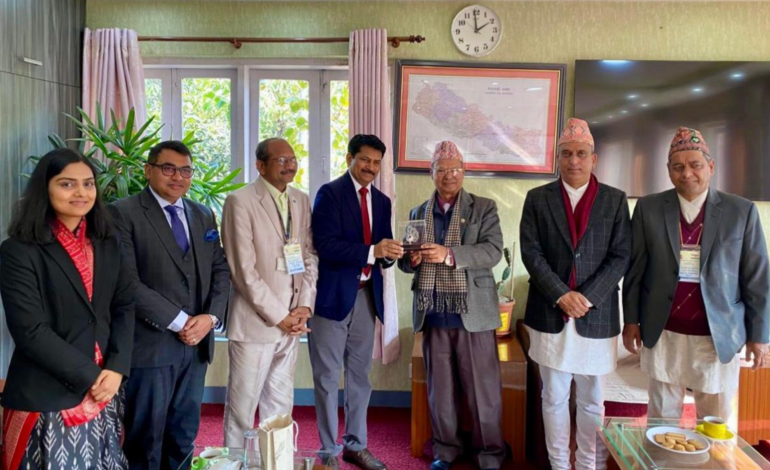
India, Nepal agree to deepen agricultural cooperation with biennial action plan

India and Nepal have agreed to significantly expand bilateral cooperation in the agriculture sector by formulating a comprehensive biennial action plan within the next three months, aimed at translating existing agreements into measurable outcomes on the ground.
The decision was taken during the ninth meeting of the Nepal–India Joint Agriculture Working Group, held over two days in Kathmandu. The meeting focused on strengthening collaboration across farming, livestock, research, infrastructure, and trade, according to Nepal’s Ministry of Agriculture and Livestock Development.
Both sides agreed to enhance cooperation between agricultural universities and research institutions, particularly between India’s Indian Council of Agricultural Research (ICAR) and Nepal’s Nepal Agricultural Research Council (NARC). Separate action plans will be developed to promote joint research, technology transfer, and capacity building in modern agricultural practices.
A major highlight of the discussions was the decision to expand collaboration in the livestock, poultry, and fisheries sectors under a separate memorandum of understanding. Officials noted that these areas are critical for improving rural incomes, food security, and nutritional outcomes in Nepal.
The two countries also agreed to streamline logistical processes to ensure the smooth and timely supply of chemical fertilisers, a key concern for Nepalese farmers. Cooperation will also be strengthened in agricultural infrastructure development, including storage, irrigation, and value-chain facilities.
Regular dialogue between relevant agencies was emphasised to resolve technical issues related to food quality standards, quarantine procedures, and cross-border movement of agricultural goods.
The Indian delegation reiterated New Delhi’s commitment to expanding agricultural cooperation with Nepal under its “Neighbourhood First” policy. This includes support for agricultural research, technology dissemination, and infrastructure development tailored to Nepal’s specific needs.
Reviewing the outcomes of ongoing collaboration, the Nepali side highlighted the success of a livestock development initiative involving high-quality Murrah buffaloes provided by India. As of now, 92,766 doses of semen have been produced from 15 Murrah male buffaloes gifted by the Indian government.
These buffaloes were supplied under an agreement reached during former Nepal Prime Minister Pushpa Kamal Dahal’s visit to New Delhi in 2023. The initiative aims to improve native buffalo breeds in Nepal, boosting milk productivity and farmers’ incomes.
Acknowledging the impact of this support, Nepal expressed gratitude to the Indian government, describing the programme as a significant contribution to livestock development and genetic improvement.
Trade and market access issues also featured prominently in the discussions. Nepal welcomed India’s recognition of laboratory testing for eight categories of Nepali agricultural products and urged further expansion of the list.
In April this year, India officially recognised test certificates issued by Nepal’s National Food and Feed Reference Laboratory for the first time, allowing select Nepali food products to be tested domestically before export. Nepal also sought unhindered access for its agricultural produce to the Indian market.
The meeting further explored cooperation in emerging areas such as digital agriculture, climate-resilient farming, natural farming systems, and regional food security.
Both sides agreed that the tenth meeting of the Joint Agriculture Working Group will be held in India on dates to be finalised through mutual consultation.
The meeting was co-chaired by Hari Bahadur K.C., Joint Secretary at Nepal’s Ministry of Agriculture and Livestock Development, and Pramod Kumar Meherda, Additional Secretary at India’s Ministry of Agriculture and Farmers’ Welfare.