India calls out Pakistan’s irony over crimes against humanity allegations at the UN

India on Tuesday delivered a strong rebuttal to Pakistan at the United Nations, calling it deeply ironic that a country “long associated with grave crimes against humanity” continues to hurl unfounded allegations against others. New Delhi accused Islamabad of misusing multilateral platforms to divert attention from its own record of human rights violations and support for terrorism.
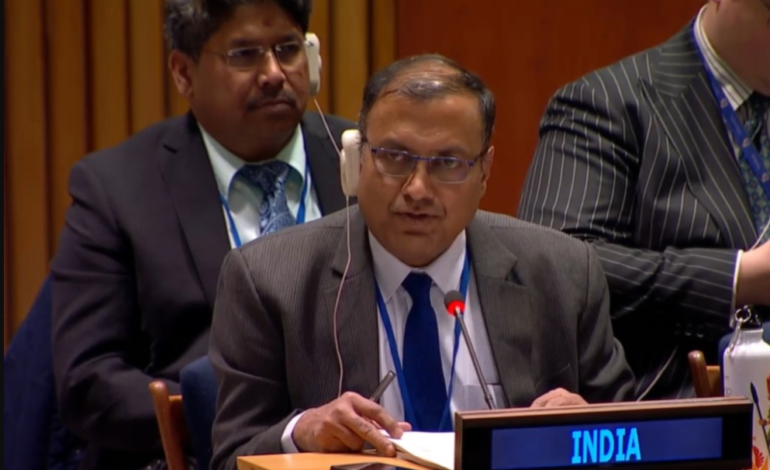
Responding to comments made by Pakistan during a meeting of the preparatory committee for the United Nations Conference on Prevention and Punishment of Crimes against Humanity, India’s Additional Secretary in the Ministry of External Affairs, Luther M. Rangerji, said Pakistan should first address the systematic persecution of minorities within its own borders.
“Pakistan should first address the systematic persecution of minorities including Hindus, Sikhs, Christians, and Ahmadiyya in its territories,” Rangerji said, underscoring what he described as Islamabad’s long-standing pattern of intolerance and impunity.
Rangerji noted that the Pakistani delegation represented “a geographical space long associated with grave crimes against humanity,” which have endangered the lives of innocent people within Pakistan itself. He added that the irony was unmistakable, as “the very perpetrators of these acts continue to receive shelter and patronage” in Pakistan.
India also drew attention to persistent reports of forced abductions, forced religious conversions, and forced marriages of women and girls belonging to minority communities in Pakistan. According to Rangerji, the perpetrators of such crimes often operate with near-total immunity, reflecting a systemic failure to protect vulnerable populations.
The strong exchange followed Pakistan’s attempt to raise the Kashmir issue and level allegations against India during Monday’s meeting of the committee. The session was convened to prepare for the UN Conference on Prevention and Punishment of Crimes against Humanity, scheduled for 2028, which aims to draft an international convention addressing such crimes.
After Rangerji’s initial response, a First Secretary at Pakistan’s UN mission, Zulifqar Ali, exercised the right of reply on Tuesday, launching another attack on India. This prompted Rangerji to take the floor once again, further exposing what India described as Pakistan’s record of sponsoring cross-border terrorism and suppressing minority rights.
He said Pakistan’s statements reflected a “continued misuse of all available multilateral platforms” to distract the international community from its own human rights abuses and long-standing involvement in supporting terrorist networks.
India also reiterated its firm position on Jammu and Kashmir. “Let me state this unequivocally — the Union Territory of Jammu and Kashmir is an integral and inalienable part of India,” Rangerji said, stressing that laws and administrative measures introduced in the region are strictly internal matters.
He concluded by urging Pakistan to focus on dismantling terrorist infrastructure operating from its soil, addressing internal human rights violations, and fulfilling its obligations under international law, rather than spreading misinformation at international forums.
India’s response highlighted New Delhi’s growing assertiveness at the UN in countering what it views as politically motivated narratives, while reinforcing its stance on sovereignty, counterterrorism, and the protection of human rights.