Indian students in Bangladesh face growing fear amid political turmoil

Fear and uncertainty have increasingly shaped the daily lives of thousands of Indian medical students in Bangladesh, a country that was long regarded as a safe, culturally familiar, and affordable destination for higher education. Political instability, rising anti-India sentiment, and concerns over religious targeting have transformed what was once a stable academic environment into a space marked by anxiety and caution.
More than 9,000 Indian students, most of them enrolled in medical colleges, currently study in Bangladesh. They were drawn by comparatively lower tuition fees and accessible admission pathways, especially when private medical education in India became financially prohibitive. For years, Indian students integrated smoothly into Bangladeshi campuses, sharing classrooms, hostels, and social spaces without major friction.
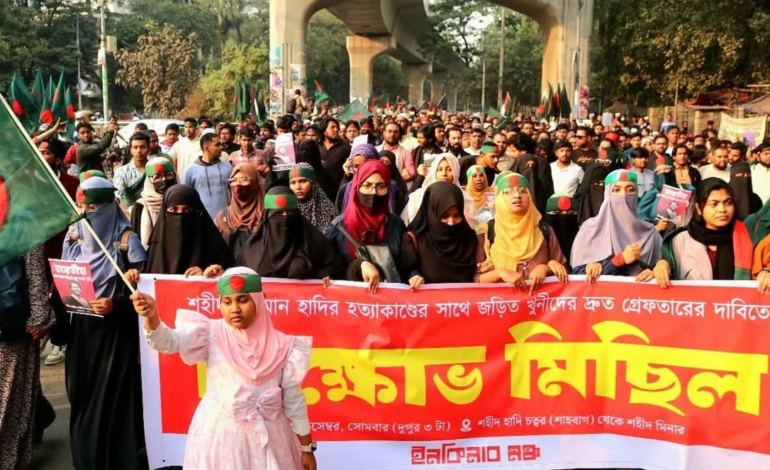
That sense of security began to unravel after the removal of Prime Minister Sheikh Hasina in August 2024, following a student-led uprising and a violent political crackdown. Since then, the country has witnessed heightened political tension, street protests, and a surge in polarising rhetoric. Against this backdrop, foreign students—particularly Indians—have begun to feel exposed.
In December, an assault on an Indian student by local gangs, during which his phone and wallet were stolen, intensified fears across campuses. The incident, captured on CCTV, circulated widely among student groups and became a symbol of growing vulnerability. While such crimes are not unprecedented, many students believe nationality now plays a role in how exposed they feel. As a result, self-imposed curfews, limited social interactions, and constant vigilance have become routine.
The situation is further complicated by Bangladesh’s approach to national elections amid a charged political climate. Although the interim government under Muhammad Yunus maintains that law and order remain intact and that foreigners are not being systematically targeted, students say these assurances offer little psychological comfort. Increased police presence has coincided with heightened rhetoric, creating an atmosphere of tension rather than reassurance.
For Indian Hindu students, the anxiety is layered. Reports of rising attacks on religious minorities since the political transition have deepened fears, even as authorities describe such incidents as politically motivated rather than communal. On campuses, students describe subtle changes—strained interactions, altered attitudes, and a sense that identity now carries consequences. In such circumstances, distinctions between intent and impact blur.
Analysts note that the stakes extend beyond individual safety. Indian students contribute significantly to Bangladesh’s education sector through tuition fees, academic exchange, and long-standing people-to-people ties. Their presence supports institutions financially and symbolically, reinforcing bilateral goodwill. Any sustained erosion of trust risks damaging these links.
Education is often viewed as a neutral space, shielded from political upheaval. In present-day Bangladesh, however, that shield appears to be weakening. Academic timelines are disrupted, futures feel uncertain, and anxiety fills the gap left by stability. For many Indian students, the challenge is no longer limited to examinations or clinical training—it is about navigating daily life in an environment where fear has quietly become a constant companion.