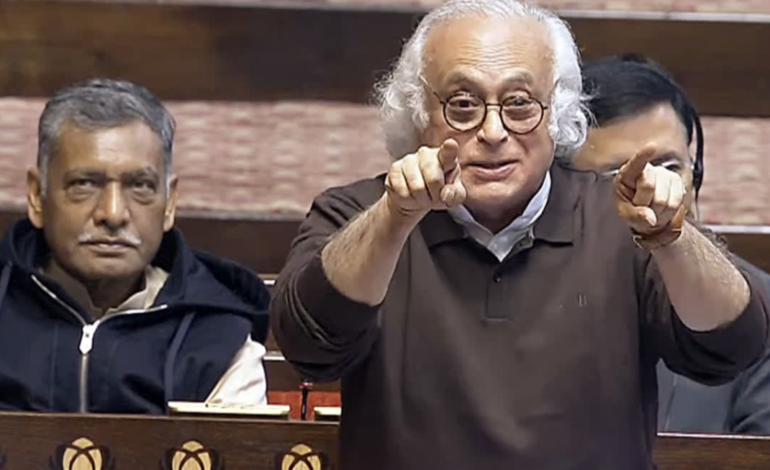
Jairam Ramesh flags gaps in US–India interim trade pact, says joint statement lacks clarity

Senior Congress leader Jairam Ramesh on Saturday raised sharp concerns over the recently concluded interim trade agreement between India and the United States, saying the official US–India Joint Statement does not provide clarity on several crucial aspects of the deal.
Posting on social media platform X, Ramesh argued that while the agreement reduces US tariffs on Indian goods to 18 per cent, it leaves key implications for India largely unexplained. He claimed that based on available information, India may effectively halt oil imports from Russia, while the US has warned that a 25 per cent penalty could be reimposed if India continues buying Russian crude—directly or indirectly.
The Congress leader further alleged that India would lower import duties to benefit American farmers, potentially harming Indian agriculture. He warned that India’s imports from the US could triple, wiping out its long-standing trade surplus in goods. Ramesh also questioned the future of India’s IT and services exports to the US, saying there remains significant uncertainty in these sectors.
He went on to suggest that Indian exports might now face higher duties than before, despite the tariff reduction. “All the hugs and photo-ops have not amounted to much. Namaste Trump has scored over Howdy Modi. ‘Dost Dost Na Raha’,” he said.
Under the interim arrangement, the US has withdrawn an additional 25 per cent tariff on Indian goods. In return, India will lower or remove duties on several US industrial and agricultural products, including dried distillers’ grains, red sorghum, tree nuts, fruits, soybean oil, wine, and spirits.
The US will levy an 18 per cent tariff on Indian exports such as textiles, leather goods, plastics, organic chemicals, home decor, artisanal products, and some machinery. If the deal is fully implemented, tariffs on items like generic medicines, gems, diamonds, and aircraft parts could be removed.
Both countries have also committed to reducing non-tariff barriers, improving access for US medical devices, easing restrictions on ICT imports, and expanding cooperation on advanced technologies such as GPUs for data centers. India has pledged to purchase $500 billion worth of US goods over five years, including energy, aircraft, and technology products.
Negotiations for a broader bilateral trade agreement (BTA) are expected to continue.