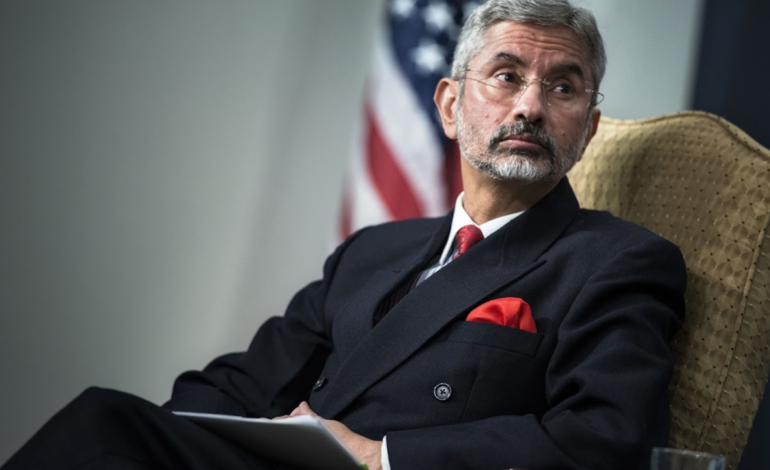
Jaishankar calls for overarching approach to human rights, not polemics

India’s External Affairs Minister S. Jaishankar has urged a broader, development-focused approach to human rights, calling on the international community to move beyond “politicisation, selectivity or double standards.”
Addressing the United Nations Human Rights Council in Geneva via video link, Jaishankar said that in a world marked by conflict and polarisation, India seeks to expand common ground. “We have consistently underlined dialogue over confrontation, consensus over division, and human-centric development over narrow interests,” he stated.
Zero tolerance for terrorism
Jaishankar emphasised that terrorism represents one of the gravest violations of human rights and called for zero tolerance toward such acts. “There can be no justification, especially when innocent lives are targeted,” he said, urging the UN system to take a principled stand.
India was elected for the seventh time to the Human Rights Council in October, securing 177 out of 188 votes cast in the General Assembly. Jaishankar described the result as a reflection of the trust placed in India, particularly by countries of the Global South.
Dialogue and capacity-building
He said India approaches the Council with the conviction that human rights are best advanced through dialogue, capacity-building and genuine partnerships rather than confrontation. As the world’s largest democracy, he added, India remains committed to promoting and protecting all human rights “on the basis of equality, openness and respect.”
Jaishankar outlined India’s holistic understanding of rights, linking them to development and security. “The insecurity of any region, or the marginalisation of any group, eventually undermines the rights and well-being of all,” he said.
Technology and development
Amid global debates on technology and inequality, Jaishankar stressed that innovation should bridge divides rather than deepen them. “Technology can and must be a force multiplier for human rights, not a new fault line,” he declared.
He cited India’s Digital Public Infrastructure as an example of inclusive development, noting that it has enabled hundreds of millions to access welfare benefits and financial services with transparency and minimal leakage. India, he said, is sharing this model for the global public good.
Highlighting the lingering effects of the pandemic, climate change and geopolitical tensions, Jaishankar concluded that development remains essential for ensuring tangible improvements in the daily lives of the most vulnerable.