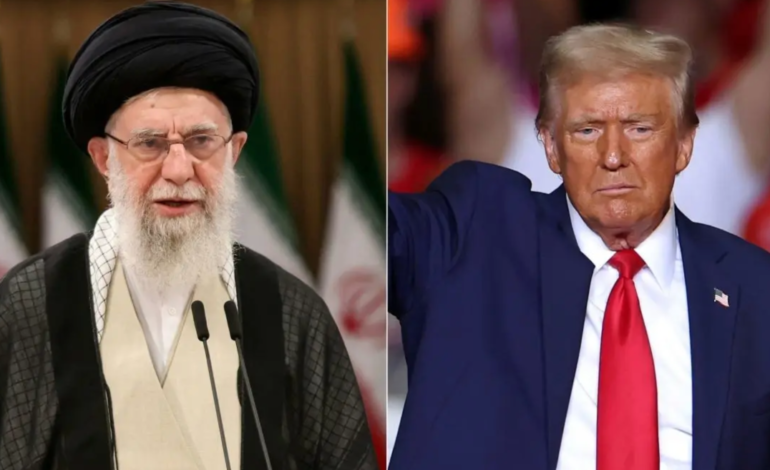
30 minutes, 3 warnings: Khamenei targets Trump as US–Iran talks begin in Geneva

As the second round of indirect nuclear talks between the United States and Iran got underway in Geneva, Iran’s Supreme Leader Ayatollah Ali Khamenei issued three pointed warnings aimed at US President Donald Trump, escalating rhetoric even as diplomatic efforts resumed.
The negotiations, mediated by Oman’s Foreign Minister Badr Albusaidi, are focused on easing tensions over Tehran’s nuclear programme. While President Trump earlier expressed optimism that Iran may be open to an agreement, Khamenei’s remarks on social media struck a sharply defiant tone.
In three consecutive posts on X, Khamenei criticized US military power and warned against Washington’s growing military presence near Iran. Referring to Trump’s past comments about pressure on the Islamic Republic, he said the United States had failed for decades to undermine Iran and would not succeed in the future.
He also questioned American military dominance, suggesting that even the world’s strongest military could be struck in ways that render it ineffective. In a third message, he referenced US naval deployments, warning that warships near Iran remain vulnerable to retaliation.
Military buildup shadows diplomacy
The renewed talks come amid heightened military activity. President Trump has reportedly ordered an increased US presence in the region, including the deployment of two aircraft carriers. Satellite imagery cited in international reports has shown the USS Abraham Lincoln operating near Iran, while the USS Gerald R. Ford is expected to join regional operations in the coming weeks.
In response, Iran’s Islamic Revolutionary Guard Corps has conducted maritime drills in the Strait of Hormuz, a strategically critical oil transit route.
Delegations and stakes
The US delegation is led by Middle East envoy Steve Witkoff and includes Jared Kushner, both of whom participated in earlier indirect discussions held in Oman. Trump has indicated he will remain indirectly involved in the process.
Iran’s team is headed by Foreign Minister Abbas Araghchi, who described his objective as securing a “fair and equitable” deal. He emphasized that capitulation under threats was not an option.
US Secretary of State Marco Rubio acknowledged the complexity of the negotiations, stating that while a diplomatic breakthrough is possible, achieving one will be difficult.