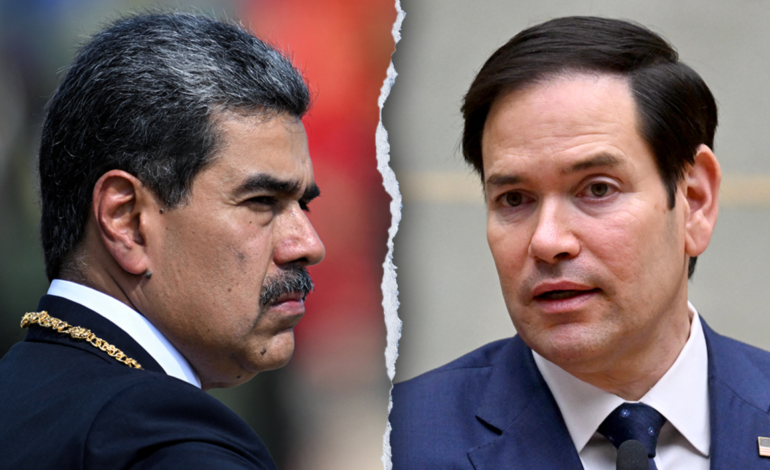
Marco Rubio admits US unaware of whereabouts of 137 deported Venezuelan migrants

US Secretary of State Marco Rubio has acknowledged in a court filing that the United States does not know the current whereabouts of 137 Venezuelan migrants who were deported earlier this year under the Aliens Act, raising fresh legal and human rights concerns amid escalating American involvement in Venezuela.
According to court documents, the migrants were deported from the United States in March and transferred to a high-security prison in El Salvador without prior notice or an opportunity to contest their removal. Rubio stated that, due to the passage of time and rapidly changing conditions in Venezuela, the US government no longer has clarity on whether the deported individuals remain in custody, have returned to Venezuela, or have moved elsewhere.
“Given the passage of time, the U.S. government does not know—nor does it have any way of knowing—the whereabouts of class members,” Rubio said in the filing. He added that it is unclear whether any of the migrants subsequently left Venezuela or were taken back into custody by authorities following recent political upheaval.
The disclosure comes as the US deepens its involvement in Venezuela after military strikes earlier this month led to the capture of longtime leader Nicolas Maduro. Rubio told the court that the rapidly evolving situation following Maduro’s removal made it impractical to provide deported migrants an opportunity to challenge their removal.
A federal judge had ruled in December that the approximately 137 deported migrants must be given a retroactive opportunity to contest their deportations. However, the Justice Department argued that facilitating hearings or returning the migrants to the United States would pose serious logistical and diplomatic challenges.
In a filing submitted late Monday, Justice Department officials said that conducting video hearings for the migrants in Venezuela would present “insurmountable legal and practical obstacles.” Officials further warned that any effort to bring the individuals back to the United States could disrupt sensitive negotiations with Venezuela’s post-Maduro interim government.
Rubio echoed those concerns, arguing that revisiting the deportations could cause “material damage” to US foreign policy interests. He said the issue risked undermining Washington’s broader diplomatic and security objectives in Venezuela during a volatile transition period.
The controversy follows recent remarks by President Donald Trump, who said the United States would effectively “run Venezuela” until a stable and orderly transition of power could be ensured. Trump has argued that US involvement is necessary to prevent rival powers from influencing the country’s future and to safeguard Venezuelan interests.
Trump further fueled debate after posting an image on social media identifying himself as the “Acting President of Venezuela,” alongside his designation as the 45th and 47th President of the United States. The post came shortly after Maduro and his wife were flown to New York to face charges related to narco-terrorism conspiracy.
Venezuela’s Vice President and oil minister, Delcy Rodriguez, was sworn in last week as interim president, as the country navigates an uncertain political transition amid heightened international scrutiny.