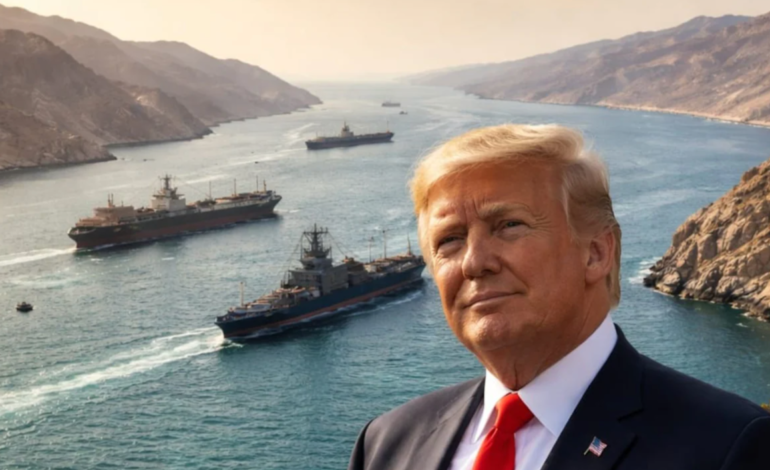
Trump says US can ‘open Hormuz, take oil and make a fortune’

U.S. President Donald Trump has sparked fresh controversy with remarks suggesting that the United States could “easily open” the strategically vital Strait of Hormuz, take control of oil flows, and “make a fortune,” as tensions continue to simmer in the Gulf region.
In a social media post, Trump described the potential reopening of the waterway as a major economic opportunity, calling it a possible “gusher for the world.” His comments come at a time when maritime traffic through the strait—one of the most critical chokepoints for global energy supply—has begun showing early signs of recovery after weeks of disruption.
The Strait of Hormuz handles a significant share of the world’s oil shipments, making it central to global energy security. Any disruption or control over the passage can have immediate and far-reaching effects on oil prices and international trade.
Trump’s remarks have drawn mixed reactions from analysts and policymakers. Supporters argue that the statement reflects a strategic posture aimed at asserting U.S. dominance in safeguarding global trade routes. Critics, however, warn that such rhetoric risks escalating tensions further in an already volatile region.
Recent data indicates a cautious return of shipping activity. Maritime intelligence reports show a gradual increase in vessel movement through the strait, though traffic levels remain well below pre-crisis norms. The recovery follows a period of heightened restrictions and security concerns that forced many operators to reroute or delay shipments.
Adding to the complexity, regional dynamics remain fragile, with ongoing geopolitical tensions involving Iran and its oversight of navigation routes. Some vessels have reportedly begun testing restrictions, signaling a tentative normalization but also underscoring the uncertainty facing global shipping.
Experts note that while reopening the strait fully would stabilize markets, the idea of directly “taking oil” raises significant legal, political, and military questions. International waterways are governed by established norms and agreements, making unilateral actions highly contentious.
The remarks also highlight the intersection of geopolitics and economics, where control over energy supply routes can translate into strategic leverage. As global markets closely watch developments in the Gulf, statements from world leaders continue to influence sentiment and expectations.
Whether Trump’s comments signal a concrete policy direction or remain rhetorical posturing is unclear. However, they underscore the high stakes surrounding the Strait of Hormuz and its critical role in the global energy landscape.