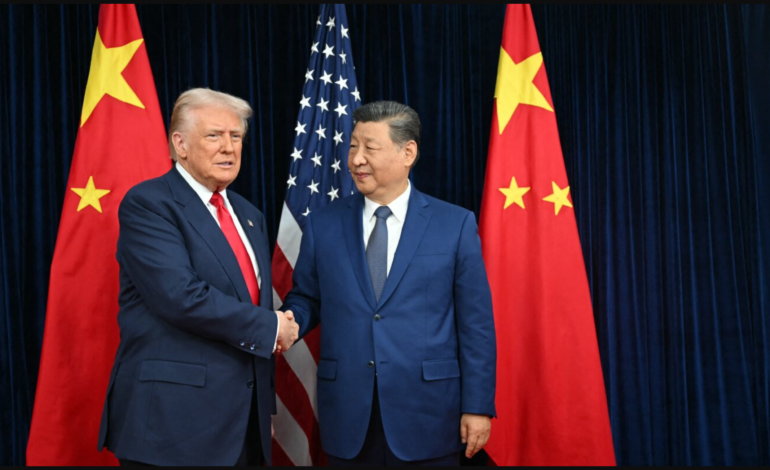
Trump speaks with Xi Jinping; trade, Taiwan and Ukraine discussed

US President Donald Trump said he held a “long and excellent” phone conversation with Chinese President Xi Jinping, describing it as constructive and far-reaching, with discussions spanning trade, security, Taiwan, energy cooperation, and global conflicts.
Trump said the leaders engaged in detailed talks on economic ties, particularly China’s purchases of American energy and agricultural products. He claimed Beijing is considering increased imports of US oil and gas and expanding soybean purchases to 20 million tonnes this season, with a commitment to 25 million tonnes next year.
The call also covered aviation, manufacturing, and critical supply chains, including aircraft engine deliveries, which Trump described as a positive step for bilateral economic cooperation. He emphasized that dialogue on these issues could help stabilize trade relations between the world’s two largest economies.
Trump highlighted his personal rapport with Xi, saying their relationship remains strong and crucial for maintaining stability in US–China ties. He expressed confidence that sustained engagement over the next three years would produce “many positive results” for both countries.
The two leaders also discussed geopolitical flashpoints, including the Russia–Ukraine war, tensions surrounding Iran, and the sensitive issue of Taiwan. While details were not publicly disclosed, Trump indicated that both sides exchanged views on these global challenges.
Trump said his planned April visit to China was also part of the conversation, calling it an important diplomatic milestone he is looking forward to. The White House did not release an official readout of the call, leaving Trump’s statements as the primary account of the discussion.
US–China relations remain a mix of competition and cooperation, shaped by trade disputes, military concerns in the Indo-Pacific, and technological rivalry. Despite periodic tensions, both nations continue high-level engagement given their influence on global markets, security, and diplomacy.
The call signals that Washington and Beijing are keeping communication channels open at the highest level, even as strategic differences persist.