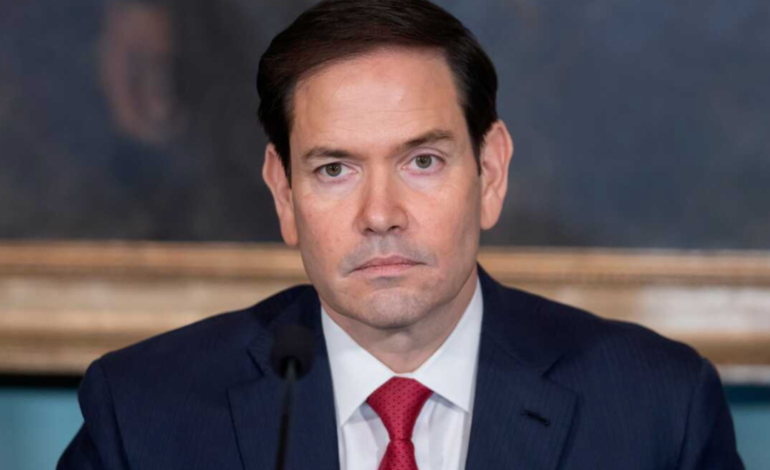
US to finish Iran fight in weeks, says Marco Rubio

The United States expects to achieve its core military objectives against Iran within “a matter of weeks, not months,” Secretary of State Marco Rubio said, highlighting rapid progress in dismantling Tehran’s key defence capabilities even as diplomatic efforts continue in parallel.
In an interview with Good Morning America, Rubio outlined a focused military strategy aimed at significantly weakening Iran’s armed forces and preventing it from developing nuclear weapons. He said U.S. operations are already targeting critical assets, including Iran’s navy, air force, and missile-launching infrastructure.
“We are destroying Iran’s navy and reducing their missile-launching capability by a significant percentage,” Rubio said. He added that the broader goal is to eliminate Iran’s defence industrial base to prevent future production of missiles and drones.
Rubio emphasized that the mission has remained consistent from the outset. According to him, U.S. objectives include the destruction of Iran’s air force and navy, a sharp reduction in its missile capabilities, and the dismantling of manufacturing facilities tied to its military programs. “All of this is to ensure they can never use these capabilities to acquire a nuclear weapon,” he said, adding that the campaign is progressing “on or ahead of schedule.”
His comments follow recent statements by President Donald Trump, who has warned of possible escalation, including strikes on Iran’s energy infrastructure, if diplomatic efforts fail to yield results.
Despite the ongoing military campaign, Rubio stressed that diplomacy remains Washington’s preferred path. He noted that communication channels with Iran are active through intermediaries, with messages being exchanged as part of an effort to test whether a negotiated solution is possible.
“There are some conversations going on,” Rubio said, suggesting that internal divisions may be emerging within Iran’s leadership. He indicated that certain figures in Tehran are privately signaling openness to de-escalation, though he cautioned that such efforts could ultimately fall short.
On the strategic front, Rubio firmly rejected Iran’s threats to disrupt shipping through the Strait of Hormuz, a vital global energy corridor. He warned that any attempt to control the waterway would not be tolerated, noting that multiple countries have significant stakes in keeping it open.
Rubio also accused Iran of supporting militant groups across the region, linking Tehran to organizations such as Hezbollah, Hamas, and the Houthis. However, he drew a distinction between Iran’s leadership and its population, describing the Iranian people as separate from the policies of their government.
The evolving situation reflects a dual-track U.S. strategy — sustained military pressure combined with cautious diplomatic outreach — with the coming weeks likely to determine whether a broader conflict can be avoided.