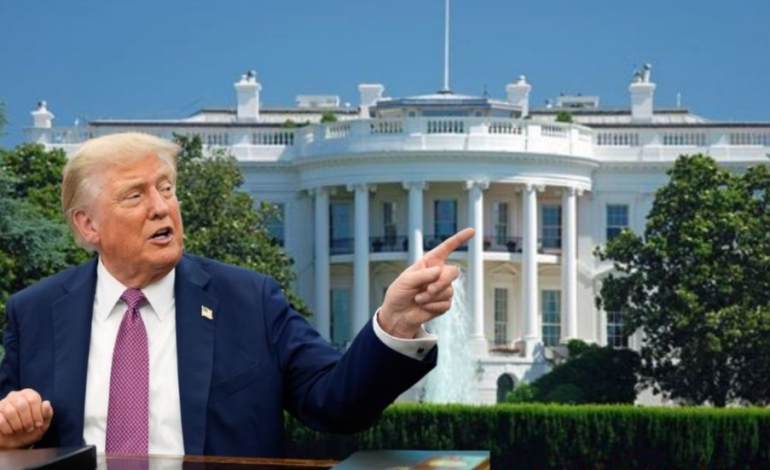
White House seeks $1.5 trillion defence budget amid escalating Iran conflict

The White House has proposed a massive $1.5 trillion defence budget for the upcoming fiscal year, marking what could be the largest year-on-year increase in Pentagon spending since World War II, as the United States confronts rising military costs linked to the ongoing conflict with Iran.
The proposal, submitted to lawmakers on Friday, reflects the growing financial demands of sustained military operations and heightened global security challenges. However, as with all presidential budget requests, the plan remains a proposal and must be approved by Congress before becoming law.
The significant increase underscores the scale of current U.S. military engagement and preparedness efforts. Analysts note that the Iran conflict has added considerable pressure on defence resources, from operational deployments to advanced weapons systems and logistical support.
Developments on the ground highlight the intensity of the situation. On Friday, one crew member from a downed U.S. fighter jet over Iran was successfully rescued during a high-risk search and rescue mission. U.S. and Israeli officials, speaking on condition of anonymity, confirmed the operation, adding that efforts are ongoing to locate the second crew member.
The rescue mission, reportedly supported by Israeli forces, reflects deepening coordination between the two allies as tensions escalate in the region. The incident also underscores the risks faced by military personnel as aerial operations continue over contested areas.
Meanwhile, Israeli Prime Minister Benjamin Netanyahu stated that Israeli strikes have significantly degraded Iran’s industrial capabilities. According to him, nearly 70 percent of Iran’s steel production capacity has been destroyed, a move aimed at weakening Tehran’s ability to manufacture weapons and sustain military infrastructure.
Experts suggest that such developments could have broader implications beyond the battlefield, potentially disrupting regional supply chains and impacting global markets tied to industrial commodities.
The proposed defence budget signals a broader strategic shift toward reinforcing military readiness in an era of renewed great-power competition and regional conflicts. It also reflects Washington’s intent to maintain a decisive edge in both conventional and emerging domains of warfare.
However, the scale of the proposal is expected to spark debate in Congress, where lawmakers will weigh national security priorities against fiscal concerns. Questions over long-term sustainability, economic impact, and strategic clarity are likely to shape discussions in the weeks ahead.
As the situation in Iran continues to evolve, the proposed budget highlights the high stakes involved—not just militarily, but economically and politically—for the United States and its allies.