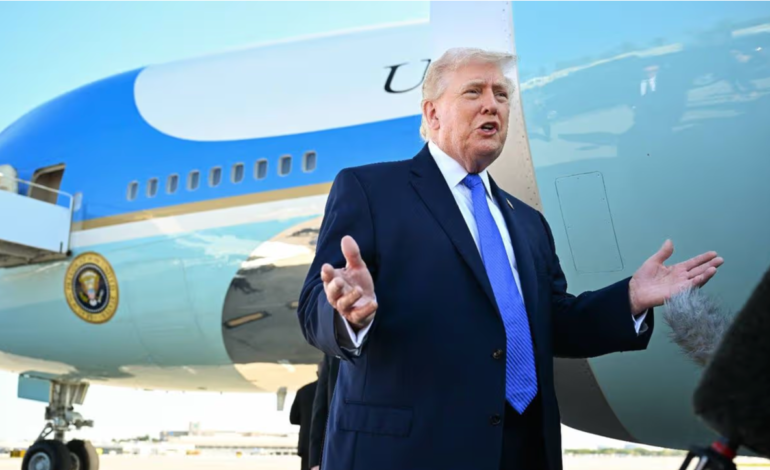
White House defends Trump’s Iran strategy amid questions on 15-point ceasefire plan

The White House has defended U.S. President Donald Trump’s approach to the ongoing Iran conflict, as questions intensify over a reported 15-point ceasefire plan aimed at ending the war.
During a press briefing, White House Press Secretary Karoline Leavitt was pressed to confirm details of the proposal, particularly regarding restrictions on Iran’s nuclear programme and provisions related to the strategic Strait of Hormuz.
Leavitt stopped short of confirming specifics, cautioning against relying on anonymous sources. However, she reiterated that any information directly stated by President Trump should be considered credible. “If you’ve heard it from the President of the United States, obviously it’s true,” she said, emphasizing that Washington’s objectives have been consistently outlined in public statements.
The reported ceasefire plan, which has been circulating in media reports, is said to include strict curbs on Iran’s nuclear ambitions, a halt to support for regional proxy groups, and measures to ensure the reopening and security of key global shipping routes.
👉 For full context on the proposal, read our earlier report:
Trump warns of stronger action as US pushes Iran truce plan amid escalating war
Leavitt was also questioned about criticism that the administration’s stance may have shifted—from a red line preventing Iran from acquiring nuclear weapons to broader restrictions on uranium enrichment. In response, she maintained that the president has been “quite clear” about his expectations from Tehran.
The remarks come at a time of heightened tensions in the Middle East, with ongoing military exchanges between Iran and Israel and continued uncertainty around diplomatic efforts. While Washington is pushing for a structured ceasefire framework, Tehran has shown resistance to proposals that could limit its nuclear programme or strategic influence.
👉 This follows earlier developments where Iran denied negotiations with the U.S.:
Trump claims ‘very good’ Iran talks, Tehran denies negotiations
The Strait of Hormuz remains central to the crisis, as any disruption could significantly impact global energy markets. Analysts warn that without clear diplomatic progress, the situation risks further escalation.
With the White House declining to elaborate on the reported plan, uncertainty continues to surround the path toward de-escalation, leaving global markets and regional powers closely watching the next moves