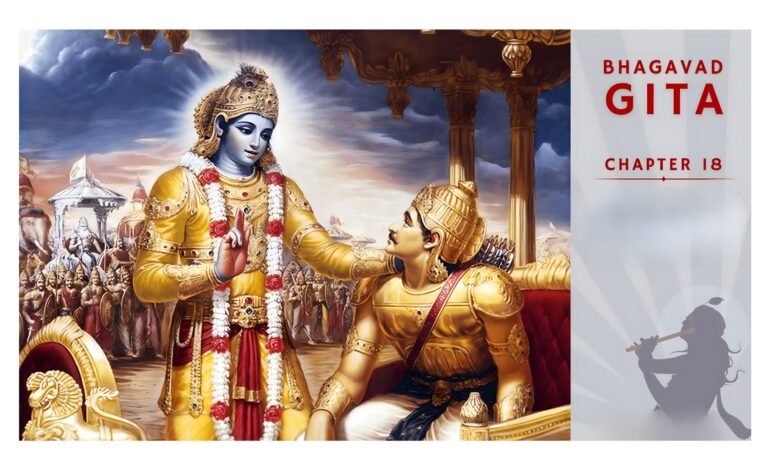
Gita study – as I understand it, chapter 18: the yoga of liberation and renunciation (part 2)

By: Rajendra Kapil
The second part of the eighteenth chapter begins with a discussion on the knowledge of caste and duty prevalent in society. In common Indian society, there is a belief that caste is hereditary. That is, a person’s caste is determined by the family into which they are born. The son of a Brahmin is automatically a Brahmin, and the son of a Shudra is considered ineligible for higher duties.
Lord Krishna challenges this notion, stating that caste and duty arise not from birth, but from nature and inherent qualities. The Bhagavad Gita extensively discusses the three fundamental qualities (Gunas) present in all beings: Sattva (goodness), Rajas (passion), and Tamas (ignorance). These qualities influence a person’s character, and it is based on them that an individual’s disposition and tendencies are formed. In the following verses, the Lord clarifies the characteristics of different castes, indicating the natural tendencies that define a Brahmin, Kshatriya, Vaishya, or Shudra.
ब्राह्मणक्षत्रियविशां शूद्राणां च परन्तप।
कर्माणि प्रविभक्तानि स्वभावप्रभवैर्गुणैः॥41॥
Meaning: O Parantapa! The duties of Brahmins, Kshatriyas, Vaishyas, and Shudras are divided according to the qualities born of their nature.
Now, Lord Krishna elaborates on the natural tendencies of each caste: what a Brahmin’s nature should be, the qualities of a Kshatriya, the conduct expected of a Vaishya, and why Shudras are assigned primarily to service.
- Brahmin: A Brahmin’s natural tendency is to acquire knowledge. They exhibit simplicity in behavior, humility, and forgiveness. The knowledge gained in youth is later shared with others as a teacher. Study of the Vedas, adherence to scriptures, disciplined daily routines, purity of heart, full control over the senses, and compassion toward others are hallmarks of a Brahmin. Meditation, devotion, and leading a straightforward, simple life are the natural duties of a Brahmin.
- Kshatriya: The highest virtue of a Kshatriya is courage and valor. They possess strength, perseverance, and strategic intelligence. Mastery in warfare is their adornment. They stand against injustice, defend the helpless and poor, and uphold righteousness—these are the natural duties of a Kshatriya.
- Vaishya: A Vaishya’s duties include agriculture, cattle rearing, and honest trade. They should be competent in commerce. While modern times may see exploitation in business, Krishna emphasizes that a true Vaishya is honest and fair. Whether dealing with a child or an adult, their conduct should be free of deceit. Purity in trade enhances mental clarity and spiritual purity, making the path to the Lord’s abode easier for a Vaishya Yogi.
- Shudra: Shudras are those who lack interest in spiritual knowledge or meditation. By nature, they tend to be timid and disinclined toward learning warfare or managing complex commerce. Such individuals are entrusted with the service of society. Through humble service, they gain satisfaction, which purifies them internally. The purity of action and humility in service leads them toward the supreme abode of the Lord.
शमो दमस्तपः शौचं क्षान्तिरार्जवमेव च।
ज्ञानं विज्ञानमास्तिक्यं ब्रह्मकर्म स्वभावजम् ॥
शौर्यं तेजो धृतिर्दाक्ष्यं युद्धे चाप्यपलायनम्।
दानमीश्वरभावश्च क्षात्रं कर्म स्वभावजम्॥
कृषिगौरक्ष्यवाणिज्यं वैश्यकर्म स्वभावजम्।
परिचर्यात्मकं कर्म शूद्रस्यापि स्वभावजम्॥
By diligently performing their natural duties, a Karma Yogi attains the Lord naturally. This forms the foundation of Karma Yoga. No action is entirely free from fault, but what matters is the intention. Every act performed with pure intention yields pure results. Action is physical, while the purity of intent is mental. Lord Krishna asserts that every act done with a pure heart is dear to Him, and the Yogi performing it reaches the Supreme Abode. Tulsi Baba also emphasizes in Ramcharitmanas that:
“A pure-hearted person pleases Me, and deceit or duplicity does not affect Me.”
Krishna also warns Arjuna that if he refuses to fight out of attachment, he will be destroyed. He must abandon attachment, recognize his natural Kshatriya duty, and be ready for battle. All actions should be offered to the Lord, and He will take care of the results. The body is like a machine, and the divine energy within keeps it functioning. This sacred knowledge is given privately to Arjuna because of his devotion and love for Krishna. Krishna instructs him to reflect seriously, follow the guidance, and dedicate all actions to Him for ultimate welfare.
सर्वधर्मान्परित्यज्य मामेकं शरणं व्रज ।
अहं त्वा सर्वपापेभ्यो मोक्षयिष्यामि मा शुचः ॥
Meaning: Abandon all duties and take refuge solely in Me, the Supreme Being. I will free you from all sins; do not grieve.
This verse conveys a powerful message to all devotees: after performing one’s duties and social responsibilities, surrender all actions to the Lord with confidence. He will liberate all from sin and guide them toward moksha (liberation). No grief or anxiety is necessary. Such assurance directly from the Lord is the greatest blessing a devotee can receive.
Towards the end of the Bhagavad Gita, Krishna explains that this sacred knowledge is not for everyone—it is meant only for devoted and loving followers seeking the Lord. It should never be imparted to the unworthy or those who do not believe in God. Whoever reads, understands, and shares this knowledge with sincere devotion will be dear to Krishna, and its hearing will inspire devotion in the listener.
Finally, Krishna asks Arjuna whether he has benefited from their dialogue. Arjuna falls at Krishna’s feet, overwhelmed with love, and says:
नष्टो मोहः स्मृतिर्लब्धा त्वप्रसादान्मयाच्युत ।
स्थितोऽस्मि गतसंदेहः करिष्ये वचनं तव ॥
Meaning: O Keshava! By Your grace, my delusion is destroyed, I have regained clarity, and I am now firm and without doubt. I will follow Your instructions.
Since Sanjaya was narrating this dialogue to King Dhritarashtra through divine vision, he concludes by reflecting: O King, I have witnessed and heard Krishna’s supremely benevolent form. Whenever Krishna and the mighty archer Arjuna are present, victory will follow their side.
Through the divine teachings of these eighteen chapters, Rajendra Kapil feels fortunate to have read and understood the hidden, sacred knowledge and has shared it for others. If this effort inspires even a small spark of devotion in any devotee, he considers his mission fulfilled. He offers his heartfelt obeisances to the Supreme Lord Krishna and all devotees.
“Jai Shri Krishna”
— Rajendra Kapil