Importance of Final Rites in Hindu Dharma

Why is Cremation Performed Soon After Death?
Human life in Sanatan Dharma is considered a sacred journey that begins with birth and continues until death. According to Hindu scriptures, sixteen sacred rites (Sanskaras) guide a person through life, and the last and one of the most important rites is Antyeshti — the final rites or funeral ceremony.
When a person passes away, family members and society are naturally overwhelmed with grief. Yet, preparations for the final rites begin soon afterward. This often raises an important question: why is cremation performed soon after death?
In Hindu tradition, there are spiritual, religious, and social reasons behind this practice.
1. The Journey of the Soul and the Belief in Liberation
In Sanatan Dharma, it is believed that the body is mortal, while the soul is eternal and indestructible. At the time of death, the soul leaves the physical body and begins its journey toward its next destination.
The sacred text Garuda Purana explains that when the final rites are performed properly and in a timely manner, it helps the soul attain peace and liberation (moksha).
It is also believed that if the final rites are not performed, the soul may remain restless or wander without peace. Therefore, cremation is considered a way of releasing the soul from the physical body so it can continue its spiritual journey to the next realm.
2. Returning the Body to the Five Elements
According to Hindu philosophy, the human body is composed of five fundamental elements (Panch Tatva):
- Earth
- Water
- Fire
- Air
- Ether (Space)
After death, the purpose of the final rites is to return these elements back to nature.
Through cremation, the body is offered to fire, which gradually dissolves the physical form into the five elements. This symbolizes a profound truth of life:
What comes from nature ultimately returns to nature.
3. Social and Religious Purification
Traditional beliefs hold that as long as a body remains in a house or locality, no auspicious activities are performed. Religious rituals, celebrations, and sacred ceremonies are paused during this time.
For this reason, family members and the community work together to ensure that the final rites are conducted soon, allowing the mourning process to conclude and normal life to gradually resume.
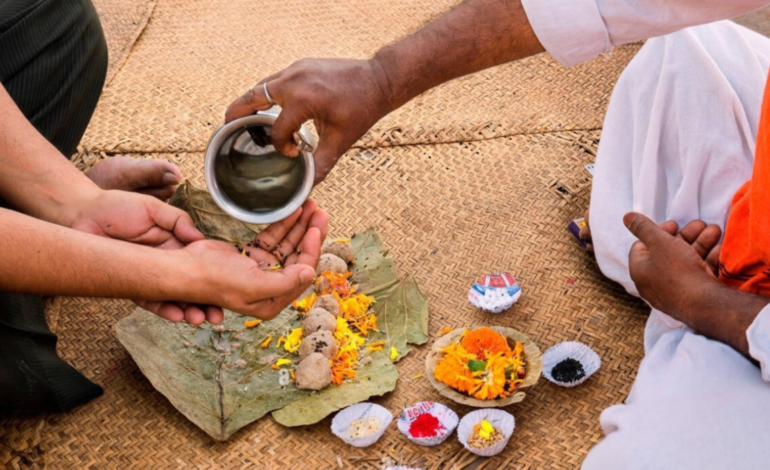
4. The Importance of Pind Daan and Ritual Offerings
During the funeral rites, Pind Daan (ritual offering of rice balls) holds great importance.
It is believed that through Pind Daan, the departed soul receives spiritual nourishment, satisfaction, and strength to continue its onward journey.
Traditionally, these offerings are made during the funeral procession and near the funeral pyre. It is believed that through these rituals, the blessings of family deities, household deities, and ancestors are invoked for the departed soul.
5. Religious Traditions and Symbolic Practices
Several symbolic rituals are performed during the final rites, such as:
- Tying the hands and feet of the body before placing it on the funeral pyre so that the body remains composed and stable.
- Using sandalwood, tulsi, or sacred wood in the funeral pyre, as these are considered pure and auspicious.
- The eldest son or closest relative lighting the funeral pyre (Mukhagni), which symbolizes duty, respect, and the final service to the departed.
These rituals are performed as a gesture of honor, gratitude, and prayer for the peace of the departed soul.
Conclusion
In Hindu Dharma, the final rites are not merely a social custom or tradition. They represent a profound spiritual philosophy and the acceptance of the cycle of life and death.
Through cremation, the message conveyed is clear:
The body is temporary, but the soul is eternal.
Performing the final rites with proper rituals is therefore considered deeply important — not only for the departed soul but also for the family and society.
Ultimately, the rite of Antyeshti reminds us of an essential truth of life:
Life is temporary, and every human being should strive to live with righteousness, compassion, and noble deeds.