Trashy ruminations by convicted criminal: MEA rejects PM mention in Epstein files

India’s Ministry of External Affairs (MEA) on Friday outright rejected any implication linking Prime Minister Narendra Modi to material in recently released Jeffrey Epstein files, describing such references as “trashy ruminations” by a convicted criminal that should be dismissed with “the utmost contempt.”
The controversy emerged after the U.S. Justice Department began the phased release of a massive trove of records connected to the investigations into financier Jeffrey Epstein and his associate. The production — carried out under a new transparency law enacted last year — comprises millions of pages of documents along with thousands of images and videos. Indian officials said they had noted press reports quoting a single email that made a passing reference to the prime minister and his official visit to Israel.
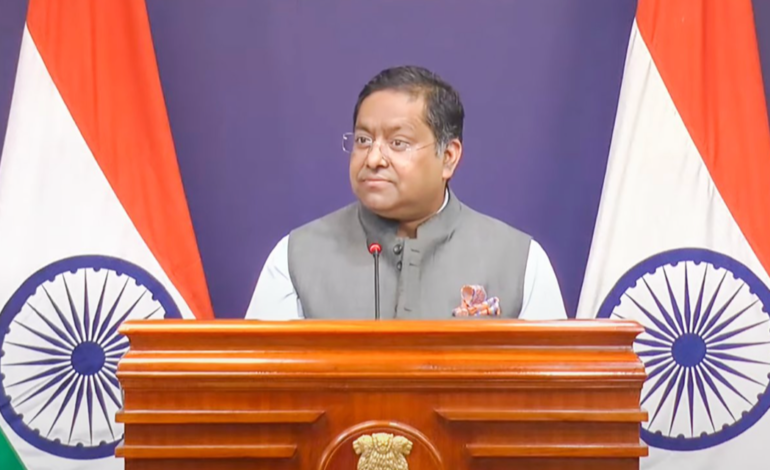
Randhir Jaiswal, spokesperson for the MEA, issued a terse statement to “clarify certain reports.” The statement acknowledged only the factual detail of Prime Minister Modi’s official trip to Israel in July 2017 and dismissed all other insinuations in the cited email as unreliable and contemptible because of their origin in the accounts of a convicted offender.
Jeffrey Epstein, a wealthy financier who faced charges related to sex trafficking of minors, died in a New York jail in 2019 while awaiting trial. His death was ruled a suicide. Since then, legal proceedings involving his estate, associates, and related materials have produced extensive documentation and litigation, and recent legislative action has required broader public disclosure of many previously sealed materials.
Officials in Washington say the Justice Department’s release responds to the Epstein Files Transparency Act, passed into law on Nov. 19, 2025. Deputy Attorney General Todd Blanche explained that the department produced roughly 3.5 million pages of responsive material after an exhaustive review. The production also included around 2,000 videos and approximately 180,000 images, the Justice Department said.
Blanche described the review as a large-scale interagency effort involving hundreds of lawyers and staff across the Department of Justice, the FBI, and multiple U.S. attorney’s offices. Teams reportedly worked intensively over several weeks to collect, review, and clear material for release, while applying legal and privacy-based exclusions that reduced an initially larger pool of potentially relevant pages.
In New Delhi, the MEA’s response emphasized that casual or speculative references within a single email should not be conflated with evidence or treated as factual assertions. The ministry’s position reflects a wider caution among governments to distinguish between unverified allegations contained in a broad corpus of documents and demonstrable facts supported by corroboration.
The episode highlights the challenges governments face as massive document disclosures circulate in media and online channels, often sparking rapid headlines and social media speculation. For official spokespeople, the immediate task becomes managing the narrative while protecting institutional reputations and ensuring that unsubstantiated claims do not generate unwarranted diplomatic consequences.
As the public release of materials continues, officials and legal teams on both sides of the Atlantic will likely contend with further headlines and queries about peripheral names and references. For now, New Delhi’s message is clear: the lone email reference is insufficient to implicate the prime minister and should be treated as the futile musings of a convicted criminal rather than a matter for official concern.