A new era of national confidence: India’s progress at home and abroad

By: Dr Avi Verma
India stands today as one of the world’s most dynamic and resilient nations—rising confidently on the strength of visionary leadership, transformative governance, and an unwavering belief in its civilizational destiny. Under Prime Minister Narendra Modi, the nation has undergone a profound shift: from a cautious regional player to a decisive global leader; from a developing economy to the world’s 4th largest; from fragmented social delivery systems to one of the most advanced digital welfare infrastructures anywhere in the world.
Over the last decade, the Government of India has launched an ambitious wave of reforms designed to strengthen the economy, modernize infrastructure, and improve the lives of ordinary citizens. Through decisive policymaking, bold national missions, and the embrace of technology at an unprecedented scale, the Modi administration has redefined what governance can look like in the world’s largest democracy.
On the domestic front, India’s transformation has been nothing short of remarkable. The country today boasts world-class digital public infrastructure driven by UPI, Aadhaar, and JAM, enabling transparent and corruption-free delivery of welfare. Direct Benefit Transfers have reached hundreds of millions, eliminating middlemen and leakages that once plagued social programs. Initiatives such as Swachh Bharat, Ujjwala Yojana, Jal Jeevan Mission, and Saubhagya have dramatically expanded access to sanitation, clean drinking water, LPG connections, electricity, and basic amenities—uplifting the dignity and quality of life for some of India’s poorest households.
Infrastructure development has been another hallmark of the Modi era. India has more than doubled its national highway network, modernized its railways, and expanded the number of operational airports beyond anything achieved in previous decades. The focus on “last-mile connectivity” has brought remote regions into the national mainstream, spurring economic activity and creating opportunities across rural and urban India.
Economically, India has emerged as a global bright spot—even through global downturns, pandemic disruptions, and geopolitical volatility. From the 10th largest economy in 2014 to the 4th largest in 2025, India continues to post robust growth rates above 6%. Record-breaking FDI inflows, a booming startup ecosystem, rapid formalization of the workforce, and rising investor confidence are testaments to the Modi government’s reform-driven economic stewardship. The introduction of the Goods and Services Tax (GST), corporate tax cuts, and production-linked incentive schemes have further strengthened India’s global competitiveness.
While challenges persist—such as unemployment, inequality, and pressing social issues—the government has demonstrated a consistent commitment to targeted solutions through skilling programs, women-centric development schemes, and major investments in education, healthcare, and nutrition. These are long-term structural challenges faced by all large developing nations, but India’s trajectory shows sustained improvement and unwavering political will to address them.
Where the Modi government has truly reshaped India’s destiny is on the global stage. India has adopted a confident, assertive, and pragmatic foreign policy that places national interest above conventional alignment. It has built strong strategic partnerships while maintaining full autonomy—a “multi-aligned” model praised across the Global South.
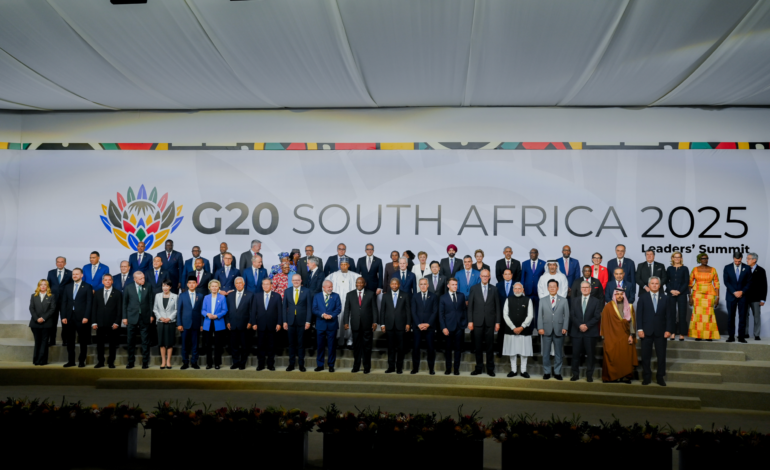
At the same time, India has effectively balanced ties with Russia, Europe, the Middle East, and ASEAN nations. It has emerged as a leader in renewable energy through the International Solar Alliance, spearheaded the Global Biofuels Alliance, and positioned itself as the voice of the Global South at major multilateral forums. The historic success of the G20 New Delhi Leaders’ Declaration underscored India’s growing diplomatic influence.
Humanitarian initiatives like Vaccine Maitri—which delivered vaccines to nearly 100 countries during the pandemic—cemented India’s image as a compassionate, responsible global power. India’s assertive responses to national security threats, including surgical strikes and border defense modernization, reflect a government committed to protecting sovereignty and national pride.
In conclusion, India under Prime Minister Modi has charted a new course—bold, self-assured, and future-ready. The nation stands stronger, more united, and more globally respected than at any time in recent memory. While challenges remain, India’s achievements over the past decade have laid a powerful foundation for the country’s continued rise as a global leader. The journey ahead is filled with promise, and India marches forward with confidence, purpose, and an unshakable belief in its destiny as a Viksit Bharat.