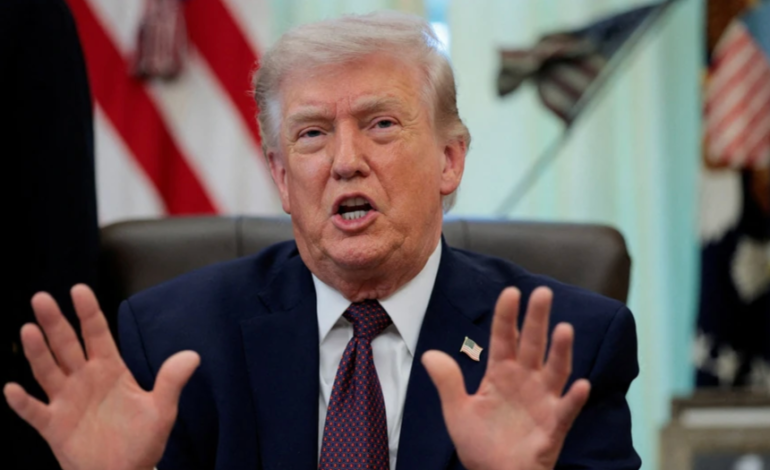
Can Trump be removed? Iran threats trigger 25th Amendment discussion

U.S. President Donald Trump’s escalating rhetoric toward Iran has ignited a political storm in Washington, with growing calls to consider invoking the 25th Amendment to remove him from office amid concerns over his conduct and decision-making.
The controversy follows a series of aggressive statements by Trump, including a recent social media post threatening attacks on Iran’s infrastructure if the Strait of Hormuz is not reopened. The remarks, which included explicit language and religious references, have drawn sharp criticism from lawmakers and analysts, who warn that such rhetoric could further destabilize an already volatile region.
The 25th Amendment, particularly Section 4, allows the vice president and a majority of the Cabinet to declare a president unfit to discharge the powers of the office. If invoked, it could temporarily transfer authority to the vice president. However, such a move is rare and politically complex, requiring substantial consensus within the administration.
Speculation around its potential use has intensified in recent days. On Kalshi, a regulated prediction platform, trading activity has surged on contracts related to whether the 25th Amendment could be invoked during Trump’s presidency. Market sentiment has shifted notably, reflecting growing public and political debate over the issue.
Critics argue that Trump’s threats—particularly those targeting civilian infrastructure—raise serious legal and ethical concerns. Some lawmakers have warned that such actions could violate international humanitarian law if carried out. Democratic Senator Chris Murphy publicly questioned Trump’s judgment, suggesting Cabinet officials should consider constitutional options in response to the president’s statements.
Trump has also set a deadline for Iran to reopen the Strait of Hormuz, warning of potential military action if his demands are not met. This comes even as his administration has described ongoing ceasefire discussions as “productive,” highlighting a contradiction between diplomatic messaging and military threats.
Meanwhile, Israeli strikes on Iranian energy facilities have added to the tension, raising fears of further escalation. Analysts caution that the combination of military action and heated rhetoric could increase the risk of a broader regional conflict.
Despite the growing debate, experts note that invoking the 25th Amendment remains highly unlikely without clear consensus within the administration. Still, the episode underscores deep political divisions in the United States and mounting concerns about leadership during a time of international crisis.
As tensions with Iran continue to rise, the intersection of foreign policy and domestic constitutional questions is placing unprecedented pressure on Washington’s political system.