Dhaka air crash sparks debate over Bangladesh’s reliance on outdated Chinese jets

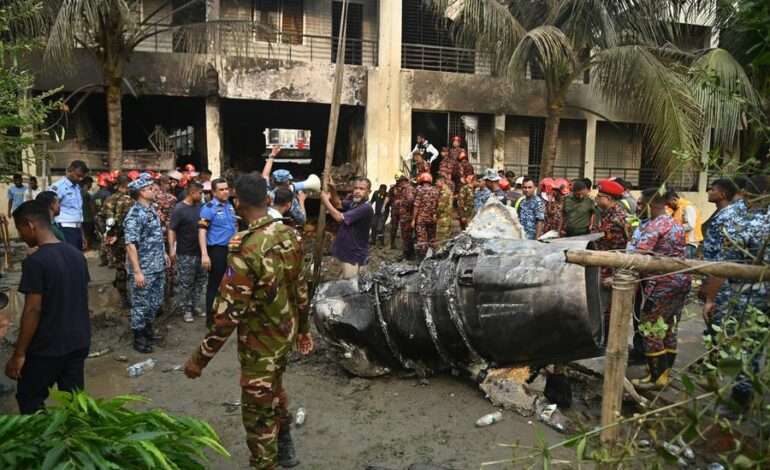
The tragic crash of a Chinese-made Bangladesh Air Force (BAF) fighter jet in Dhaka has triggered widespread criticism and reignited debate over the country’s heavy dependence on outdated Chinese military equipment.
The accident, which occurred on July 21, claimed 35 lives — most of them children — when a Chinese F-7 BGI training jet crashed into Milestone School and College in Uttara. According to Bangladesh’s Inter-Services Public Relations (ISPR), the jet had taken off at 1:06 PM and crashed just 24 minutes later.
Outrage over the crash has spilled onto social media, with students, teachers, and parents questioning why such aircraft are still used for training purposes. Critics argue that the use of aging and unreliable jets is putting innocent lives at risk.
An analysis by the Eurasia Review linked the tragedy to Bangladesh’s long-standing military ties with China, dating back to the Ziaur Rahman era. The journal described the country’s continued procurement of Chinese military hardware as a “dangerous romance.”
Despite growing public concern, the interim government led by Muhammad Yunus has reportedly approved a deal to purchase 16 new JF-10C fighter jets from China — a move branded by analysts as “reckless” in the wake of the crash.
A retired BAF officer told the journal that Chinese-made aircraft have been involved in numerous mishaps. Bangladesh currently operates around 40 F-7BGIs.
Critics also point to China’s expanding influence in Bangladesh, from ports and highways to digital infrastructure and nuclear projects. Observers warn that such military dependency may erode Bangladesh’s sovereignty and strategic autonomy.
Experts now question the Yunus government’s defence strategy and whether it will prioritize national interest or continue its reliance on low-cost, high-risk Chinese weaponry.