Bangladesh faces surge in gender-based violence and attacks on Hindus ahead of elections

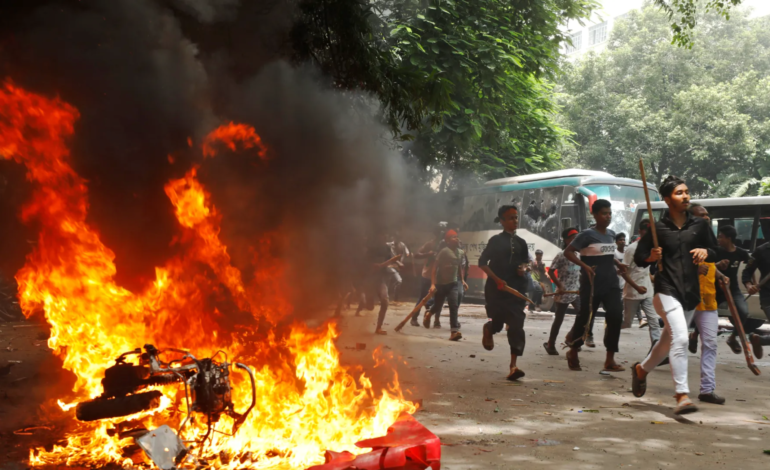
As Bangladesh prepares for general elections next month, a sharp rise in gender-based violence and attacks on religious minorities has raised serious concerns about human rights and public safety under the interim administration led by Chief Advisor Muhammad Yunus.
According to police data cited by Human Rights Watch (HRW), incidents of gender-based violence increased significantly between January and June 2025 compared to the same period last year. Rights groups say the trend reflects a deteriorating environment for women and girls, marked by growing intolerance and intimidation.
HRW reported that activists and women’s organisations have linked the rise in violence to increased activity by hardline religious groups advocating restrictions on women’s mobility and participation in public life. In May, such groups protested government initiatives aimed at improving gender equality, demanding an end to what they described as “anti-Islamic” activities. Since then, women and girls have reported increased verbal harassment, physical attacks, and online abuse, contributing to a climate of fear and silence.
The upcoming February election will be the first since the exit of the democratically elected government led by former Prime Minister Sheikh Hasina in August 2024. Rights advocates say the interim government has failed to ensure adequate protection for vulnerable communities during this sensitive political period.
HRW also documented a rise in attacks on Hindu and ethnic minority communities in recent months. In one widely reported incident in December, a 27-year-old Hindu garment worker was beaten to death by a mob over allegations of blasphemy. Rights groups have recorded dozens of violent incidents targeting Hindus, including multiple killings. Ethnic minorities in the Chittagong Hill Tracts have also continued to face abuse, including alleged mistreatment by security forces.
Despite Bangladesh’s history of female political leadership, women remain severely underrepresented in electoral politics. Several reports indicate that the upcoming polls will see the lowest participation of women candidates in the country’s electoral history. Of the political parties contesting the election, a majority have failed to nominate women candidates in meaningful numbers.
Data released by the Election Commission shows that women account for just over four percent of the total candidates contesting the February polls, despite making up roughly half of the population. Islamist parties, including Jamaat-e-Islami and Islami Andolan Bangladesh, have not nominated a single woman candidate. Even major parties with a legacy of female leadership have fielded only a small number of women.
Civil society organisations have criticised the gap between political commitments and actual implementation of gender inclusion. At a recent forum in Dhaka, speakers questioned the credibility of political parties and the Election Commission’s repeated assurances of a gender-inclusive election. Activists argued that reserved seats for women were insufficient and called for direct participation based on merit.
Forum leaders also highlighted the contradiction between women’s numerical strength as voters and their marginalisation as candidates. Women constitute nearly half of Bangladesh’s electorate, yet their voices remain largely absent from decision-making spaces.
Rights groups have urged the interim government to take immediate steps to curb violence, ensure accountability, and create a safe and inclusive environment ahead of the elections. Without meaningful action, they warn, Bangladesh risks further erosion of democratic norms and public trust during a critical moment in its political transition.