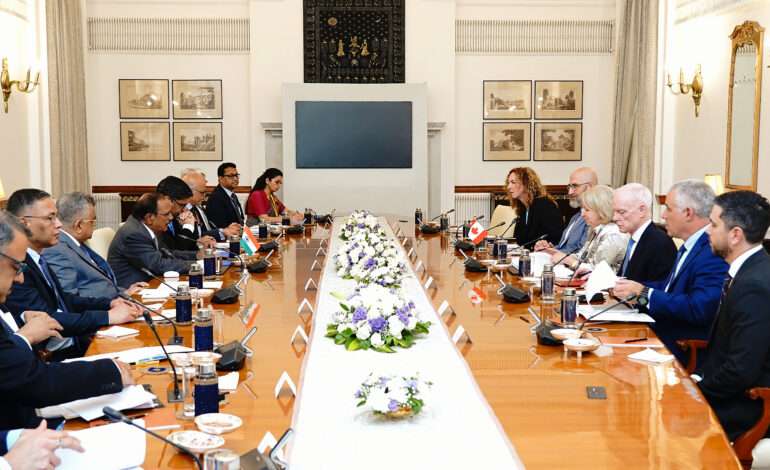
Doval-Drouin talks lead to breakthrough as Canada cracks down on Khalistan terrorists

India and Canada have made a significant breakthrough in countering Khalistan terrorism, following intensive coordination between National Security Advisor Ajit Doval and his Canadian counterpart Nathalie Drouin. The move comes after years of strained ties over Khalistan-related allegations during Justin Trudeau’s tenure, and a slower-than-expected reset under Prime Minister Mark Carney.
The breakthrough follows the arrest of Inderjeet Singh Gosal, a key coordinator for the Khalistan referendum, who had been using Canadian soil to raise funds for terror-related activities. Indian intelligence agencies have long shared dossiers and information on Khalistan elements with Canada, but previous governments reportedly did not act decisively. The new cooperation indicates a shift, with Canada now acknowledging the threat posed by these groups.
Officials said the Doval-Drouin meeting earlier this month emphasized the need to treat these elements as terrorists, not advocacy groups, highlighting their funding links to Pakistan’s ISI. The bilateral discussions have resulted in coordinated intelligence-sharing, diplomatic measures, and stronger legal action against Khalistan operatives.
India has submitted 26 extradition requests to Canada for individuals charged with terrorism and related crimes; five have been resolved so far. Authorities note that Khalistan groups have failed to regroup in Punjab, but frustrated by their lack of success in India, they have become more aggressive abroad, particularly in Canada.
The arrest of Gosal is seen as a first step in a broader campaign to dismantle Khalistan networks and curb their activities overseas. Officials caution that fully resetting relations and combating the movement will take time, but the current momentum is being hailed as a promising development in India-Canada security cooperation.