India advises nationals in Iran not to approach land borders without embassy coordination

The Indian Embassy in Tehran on Monday issued an advisory urging Indian nationals in Iran not to approach any land border crossing to travel outside the country without prior coordination with the embassy.
In a message posted on social media platform X, the embassy warned that Indian citizens should avoid moving toward land borders unless they receive explicit guidance from diplomatic officials.
“Indian nationals are hereby advised not to approach any of the land borders of Iran for travel outside the country without prior coordination with the Embassy. Any movement towards land border points should be undertaken only after obtaining explicit guidance from the Embassy,” the advisory stated.
The embassy also cautioned that it may not be able to assist Indian citizens once they have exited Iranian territory but are unable to enter another country.
“It may please be noted that the Embassy will not be in a position to extend assistance once individuals have exited Iranian territory and are unable to enter the third country concerned,” the statement added.
Officials said Indian nationals currently in Iran can contact the embassy through emergency helplines or email for assistance and guidance regarding travel or safety concerns.
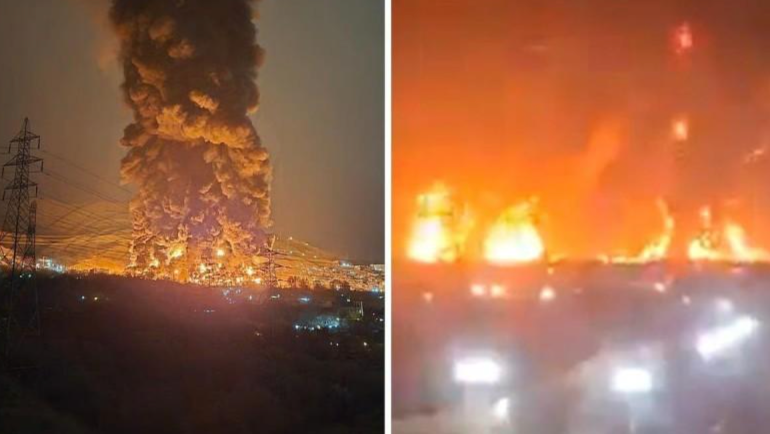
The advisory comes amid escalating tensions across West Asia following joint US–Israel strikes on Iran on February 28. The attacks triggered retaliatory drone and missile strikes by Iran targeting US assets, regional capitals, and allied forces in the region.
Iran has defended its actions as defensive measures. On Sunday, Iranian Foreign Ministry spokesperson Esmaeil Baqaei responded to criticism of Tehran’s attacks on US military bases and installations in the region.
Baqaei said missiles were being launched at Iran from neighbouring countries and alleged that US fighter jets were using the airspace of regional states to strike Iranian targets.
“Missiles are launched at Iran from the territories of neighbouring countries, and specifically near residential neighborhoods, while US fighter jets use the airspace of neighbouring countries to attack Iran, thereby endangering regional security,” Baqaei wrote on X.
Several countries in West Asia have criticised Iran’s military actions, describing them as an escalation that threatens regional stability.
Saudi Arabia on Monday condemned the Iranian attacks targeting Gulf Cooperation Council (GCC) member states and other regional partners, calling them a serious threat to security and sovereignty.
In a statement posted by the Saudi Foreign Ministry, the Kingdom said continued Iranian strikes on civilian facilities, airports, and oil infrastructure demonstrate a determination to destabilise the region and violate international law.
Saudi Arabia also warned that the ongoing escalation could have serious implications for bilateral relations, stressing that Iran’s actions risk widening the conflict across the region.