India’s BRICS chairship to emphasise humanity-first, people-centric global cooperation: EAM Jaishankar

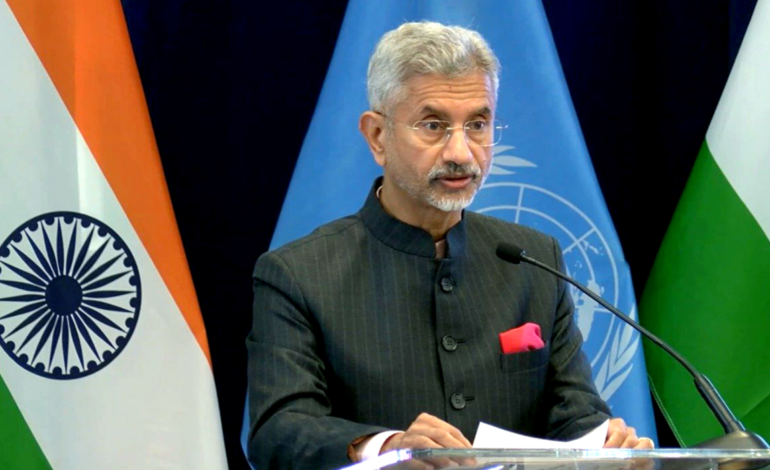
As India prepares to assume the chairship of BRICS in 2026, External Affairs Minister S. Jaishankar on Tuesday said New Delhi will lead the grouping with a “humanity-first and people-centric approach,” aimed at harnessing the collective strengths of member countries for global welfare.
Speaking at the launch of the BRICS India 2026 website, logo and official theme, Jaishankar said India’s leadership comes at a pivotal moment for the bloc, which will complete 20 years since its inception in 2026. Over two decades, BRICS has evolved into a major platform for cooperation among emerging economies and developing nations, adapting to shifting global realities while remaining focused on inclusive development.
Extending festive greetings on Makar Sankranti, Lohri, Magh Bihu and Pongal, Jaishankar said the symbolism of renewal and hope associated with these festivals mirrors India’s vision for its BRICS chairship. “India will seek to bring together the collective potential of BRICS countries for greater global welfare,” he said.
The External Affairs Minister highlighted the growing complexity of the global environment, marked by geopolitical uncertainty, economic disruption, climate risks, rapid technological change and persistent development gaps. In this context, he said, BRICS remains an essential forum for dialogue, cooperation and practical solutions that respect national priorities and different stages of development.
Jaishankar said India’s chairship theme — Building Resilience, Innovation, Cooperation, and Sustainability — reflects New Delhi’s belief that collaborative action among BRICS members can address shared challenges in a balanced and inclusive manner. The theme underscores the importance of strengthening institutional capacities, fostering innovation, and ensuring sustainable development for the benefit of all.
Explaining the significance of the newly unveiled logo, he said it blends tradition with modernity and incorporates the colours of all BRICS member countries. “The logo represents unity in diversity and conveys the idea that BRICS draws strength from the collective contributions of its members while respecting their distinct identities,” he said.
Jaishankar outlined four broad priorities for India’s chairship — Resilience, Innovation, Cooperation and Sustainability — which will guide engagement across BRICS’ three foundational pillars: political and security cooperation, economic and financial collaboration, and cultural and people-to-people exchanges.
Under the Resilience pillar, India plans to work with BRICS partners to strengthen institutional capacities in critical areas such as agriculture, health, disaster risk reduction, energy and supply chains. He emphasised the need for cooperative frameworks that enhance collective preparedness and response.
Innovation, Jaishankar said, remains a key driver of global economic growth. The deployment of new and emerging technologies is essential to addressing socio-economic challenges, particularly in developing countries, while ensuring that technological progress remains people-centric. Enhanced cooperation in start-ups, MSMEs and frontier technologies can help create a more equitable global economy.
On sustainability, he said India will prioritise climate action, clean energy transitions and sustainable development pathways that are fair and sensitive to national circumstances. “India attaches equal importance to cooperation and sustainability and will work to advance climate goals without compromising development needs,” he said.
Concluding his remarks, Jaishankar stressed that India’s BRICS chairship will focus on practical outcomes, inclusive growth and shared responsibility, reinforcing the bloc’s relevance in an increasingly fragmented global order.