India emerging as strategic bridge between Europe and West Asia

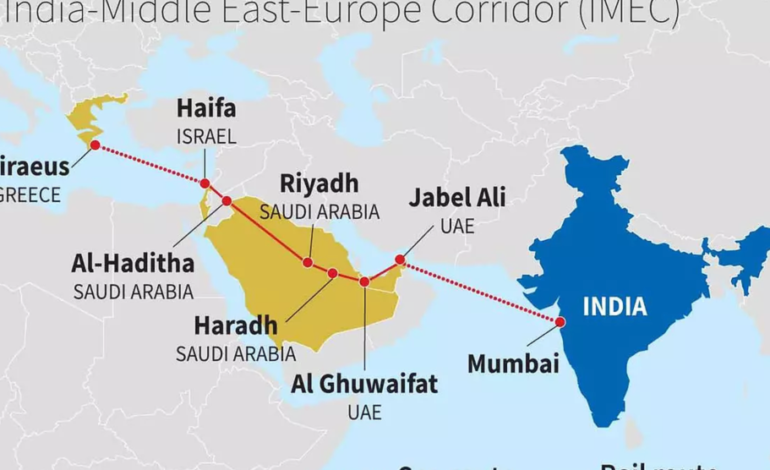
Prime Minister Narendra Modi’s anticipated visit to Israel in February is being viewed not merely as a routine diplomatic trip but as a clear marker of India’s evolving geopolitical strategy. Analysts say the visit underscores New Delhi’s ambition to position itself as a crucial bridge linking Europe with West Asia through integrated security, trade, and technological cooperation.
According to strategic observers, India’s recent engagement with the European Union has added new depth to its global posture. In late January, New Delhi and Brussels moved beyond traditional economic negotiations by pairing a proposed Free Trade Agreement with a landmark Security and Defence Partnership — the first of its kind between India and the EU.
Experts note that this development signals a shift in how both sides now approach their relationship. Trade is no longer treated as separate from security; instead, economic collaboration is being aligned with strategic and geopolitical priorities. This integrated approach reflects a recognition that economic prosperity today depends heavily on regional stability, secure supply chains, and resilient digital and maritime networks.
From an Israeli perspective, this broader alignment gives added significance to Modi’s expected visit. Observers in Jerusalem see the trip as part of a larger Indian strategy that extends beyond bilateral ties, embedding Israel within a wider geopolitical framework that links Europe, the Indo-Pacific, and West Asia.
For years, EU–India relations were often described by diplomats as “underperforming,” a polite acknowledgment of unrealized potential. The new defence partnership is now widely seen as a turning point — one that elevates India from a major market to a key strategic partner in shaping regional security architecture.
The defence agreement reportedly covers cooperation in maritime security, counterterrorism, cyber protection, critical infrastructure resilience, space collaboration, and joint defence industrial initiatives. Analysts say this comprehensive scope reflects a shared understanding that economic integration alone is insufficient without coordinated security measures.
This shift has important implications for Israel. India is increasingly viewed not just as a balancing power in Asia but as a pivotal actor connecting multiple strategic regions. Its growing role links European security concerns with Middle Eastern stability and Indo-Pacific interests.
Even without this broader context, Modi’s visit would remain significant. Since he took office, India–Israel relations have transformed from cautious engagement into an openly strategic partnership. Defence collaboration, agricultural innovation, high technology, water management, and digital solutions have become central pillars of bilateral cooperation.
The report suggests that across European capitals and in Jerusalem, a common message is emerging: India is no longer merely navigating between global power blocs — it is actively shaping the connections among them. For Israel, this evolving Indian role offers new avenues for strategic collaboration, economic integration, and technological partnership.
As global power dynamics continue to shift, India’s position as a connector between Europe and West Asia is likely to grow in importance, reinforcing its status as a key player in a multipolar world order.