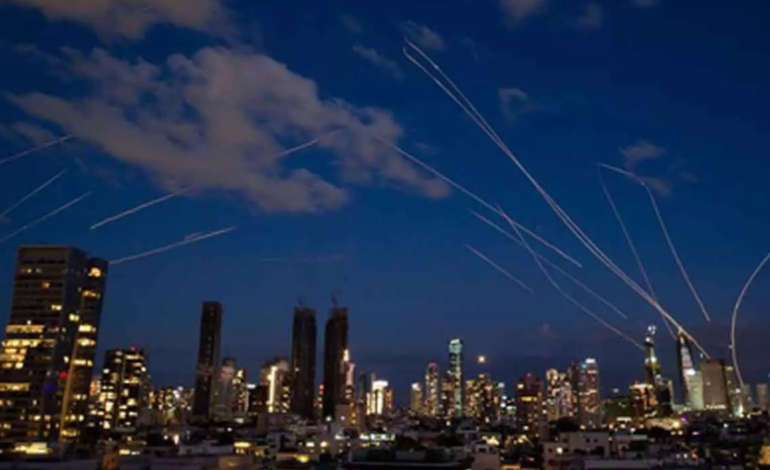
Modi government holds steady as geopolitical tensions rise in West Asia

As tensions escalate in West Asia involving the United States, Israel, and Iran, India finds itself navigating a complex diplomatic landscape that demands caution, patience, and strategic clarity. In such moments of geopolitical uncertainty, governments often face intense scrutiny at home while simultaneously managing delicate international relationships.
India’s approach so far has reflected a carefully calibrated balance. Rather than making loud public declarations, New Delhi appears to be relying on measured diplomacy and strategic restraint while monitoring the rapidly evolving situation in the region.
The complexities became evident earlier this week when the Iranian warship IRIS Dena, which had recently participated in a naval engagement in Visakhapatnam, was reportedly torpedoed by a US submarine near Sri Lanka. The incident sparked concern and debate, particularly because the vessel had visited India only days earlier as part of a naval interaction.
The development triggered criticism from some opposition leaders who questioned the government’s diplomatic posture. However, experts argue that India had limited influence over the military developments involving other global powers in international waters.
Shortly after the incident, it was revealed that another Iranian vessel, IRIS Lavan, had received permission to dock at Kochi. External Affairs Minister S. Jaishankar later confirmed that the ship had approached India before the US-Israel strikes on Iran began. The vessel and its crew were allowed entry on humanitarian grounds, reflecting India’s effort to balance diplomacy with practical considerations.
India’s response highlights the complexity of its strategic ties in the region. The country maintains strong relationships with multiple stakeholders in West Asia, including Israel, Iran, and several Gulf nations. At the same time, millions of Indian citizens live and work across the region, making stability there crucial for both economic and humanitarian reasons.
Maintaining neutrality while protecting national interests is rarely straightforward. India’s current strategy appears to focus on avoiding public confrontation while keeping diplomatic channels open with all parties involved.
Domestically, the government has also managed to maintain stability despite global uncertainties. While some neighboring countries are experiencing economic stress and energy concerns, India’s energy supply and economic activity remain largely stable.
In times of international conflict, diplomacy often unfolds quietly rather than through public statements. India’s measured response suggests an effort to prioritize long-term national interests over immediate political reactions.
As the situation in West Asia continues to evolve, India’s ability to maintain this delicate diplomatic balance will remain closely watched both at home and abroad.