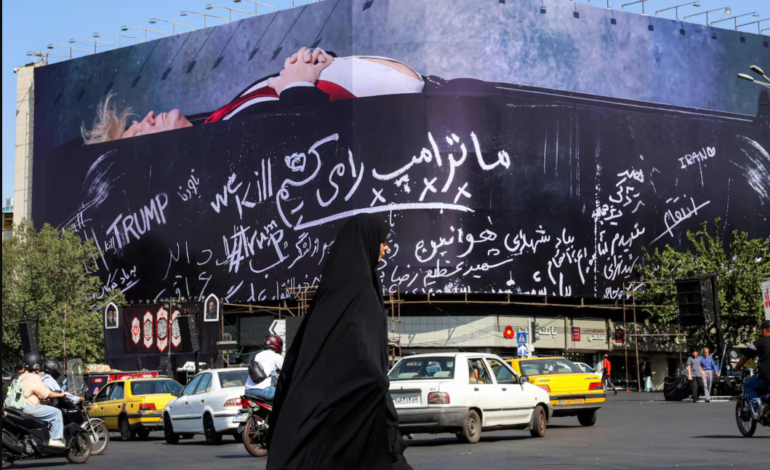
Iran’s ‘We Will Kill Trump’ billboard sparks international debate

A new billboard unveiled in central Tehran has intensified already strained relations between Iran and the United States by depicting US President Donald Trump lying in a coffin alongside the English and Persian message, “We Will Kill Trump.” The installation, displayed in Tehran’s Enghelab Square, has drawn widespread international attention as tensions continue to rise following months of military confrontation.
The large public display portrays Trump with closed eyes, disheveled hair and folded hands resting on a red tie inside an open black coffin. The billboard stands near a statue of Iran’s former Supreme Leader Ayatollah Ali Khamenei, whose death earlier this year during the US-Israeli conflict has become a central theme in Iran’s public messaging.
Iran has frequently used billboards and public art to communicate political and ideological messages. Since the outbreak of the latest conflict in February, authorities have installed numerous displays across Tehran featuring revolutionary imagery, war memorials and anti-Western themes.
According to media reports, the latest billboard reflects growing calls within sections of Iran for retaliation following the deaths of senior Iranian leaders and civilians during the conflict. Earlier this year, Iranian publications also displayed graphics targeting several Western leaders, including President Trump, Israeli Prime Minister Benjamin Netanyahu and other allied officials.
The appearance of the billboard comes amid heightened military tensions in the Middle East, including recent exchanges of strikes between Iran and US forces and continuing disputes over security in the Strait of Hormuz.
While Iranian officials have not issued an official statement specifically addressing the billboard, its prominent location underscores Tehran’s continued use of symbolic public messaging during periods of geopolitical confrontation.
The display has sparked debate internationally over political rhetoric, state-sponsored messaging and the potential impact such imagery could have on already fragile diplomatic relations. Analysts say the billboard reflects the deep hostility between Tehran and Washington at a time when prospects for renewed negotiations remain uncertain.