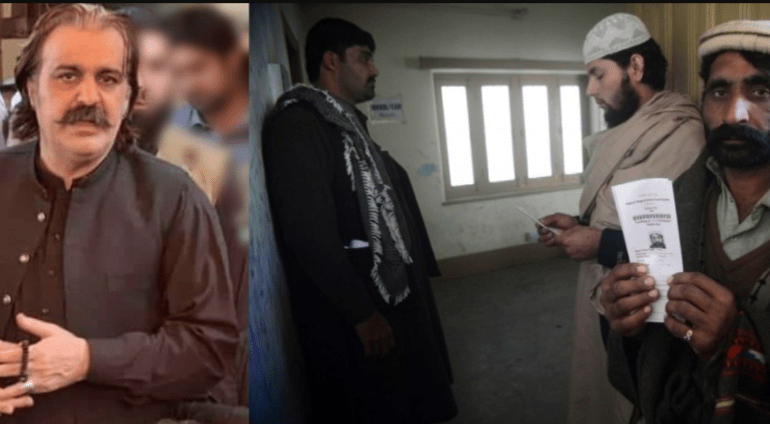
Khyber-Pakhtunkhwa CM criticises Pakistan’s Afghan refugee deportation policy

The Chief Minister of Pakistan’s Khyber-Pakhtunkhwa (K-P) province, Ali Amin Gandapur, has condemned the federal government’s decision to deport Afghan refugees, calling it a “faulty policy” and vowing that no Afghan will be forcefully deported from the province.
Speaking to the media in Islamabad on Friday, the Pakistan Tehreek-e-Insaf (PTI) leader made it clear that his administration would not support forced expulsions. “We will not force anyone. If someone wants to return voluntarily, we will help with arrangements. But the federal government’s policy is fundamentally flawed,” he stated.
His comments come amid a nationwide crackdown on Afghan refugees, following the federal government’s directive that all undocumented Afghans — including Afghan Citizen Card (ACC) holders — must leave by March 31 or face forced deportation.
Operations to repatriate Afghans have already begun in cities like Rawalpindi, Islamabad, and Karachi. On Friday alone, authorities detained over 150 Afghans in Karachi, where the city administration has begun the removal of approximately 16,138 ACC holders. Around 60 refugees were rounded up in Islamabad and Rawalpindi, according to reports.
International concerns continue to grow over the mass deportations. The United Nations High Commissioner for Refugees (UNHCR) has warned that some of the ACC holders may require international protection. UNHCR spokesperson Qaiser Khan Afridi urged the Pakistani government to view the situation through a “humanitarian lens” and promote voluntary, dignified returns.
The Afghan Taliban government has also appealed to Pakistan and Iran to allow refugees to return voluntarily, stressing the need for humane treatment. Afghanistan’s Minister of Refugees and Repatriation, Mawlavi Abdul Kabir, said even Afghans with valid visas have been deported, according to state-run Bakhtar News Agency.
Khyber-Pakhtunkhwa is home to the largest Afghan refugee population in Pakistan, with many families having lived in the region for decades. Peshawar, the provincial capital, hosts the highest number of refugees, many of whom contribute to the local economy through business and labor.
Despite calls from the UN and other international organisations to reconsider the policy, the Pakistani government remains firm on its stance. Human rights groups have condemned the move, warning of the severe risks faced by refugees amid ongoing instability in Afghanistan.