Nepal seeks India’s approval to boost power exports to Bangladesh under regional energy cooperation

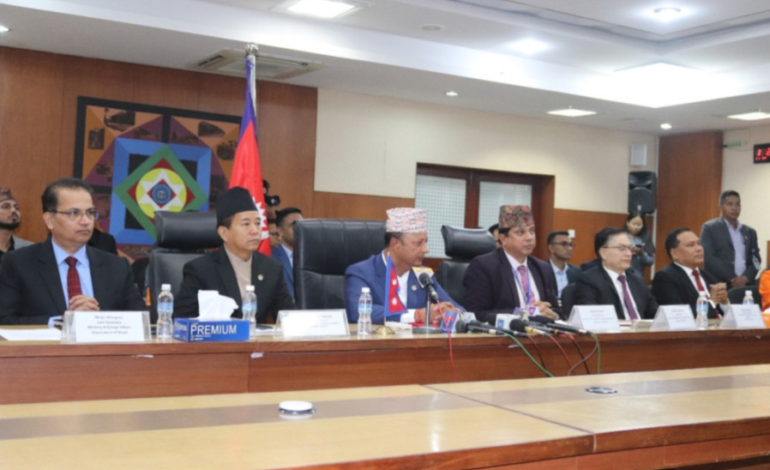
Nepal’s Minister for Energy, Water Resources, and Irrigation, Kul Man Ghising, has urged India to grant approval for the export of an additional 20 megawatts (MW) of electricity to Bangladesh through Indian transmission lines. The request, made during his meeting in Kathmandu with Munu Mahawar, Additional Secretary (North) in India’s Ministry of External Affairs, reflects Nepal’s attempts to expand regional energy trade and deepen trilateral cooperation with India and Bangladesh.
Under the existing tripartite understanding, Nepal has been supplying 40 MW of electricity to Bangladesh each year between June 15 and November 15 since 2023. This seasonal export is routed through India’s transmission network, which serves as the critical link between the two nations. Nepal now hopes to increase the export volume in line with its agreement with Bangladesh, which recently completed the procedural steps required to purchase an additional 40 MW.
Nepali officials believe that the current cross-border infrastructure can support higher power flows, provided India grants clearance for expanded usage. However, they remain uncertain about New Delhi’s response, particularly given the strained diplomatic atmosphere between India and Bangladesh since last year, when former Bangladesh Prime Minister Sheikh Hasina fled to India following a violent uprising that toppled her government. The tensions were visible again last month when Bangladesh was not invited to the South Asia Power Summit in New Delhi, which included only Bhutan, India, and Nepal.
During the meeting, Minister Ghising also sought India’s support for new transmission projects through the Line of Credit (LoC) mechanism of the Export-Import Bank of India. Several key corridors—including the Koshi Corridor in eastern Nepal and the Modi–Lekhnath line in the west—have been financed using the Indian LoC and are regarded as important for strengthening Nepal’s national grid.
He highlighted the success of past cross-border cooperation, including the 132 kV Solu Corridor, jointly inaugurated in April 2022 by the prime ministers of both nations. Spanning 90 kilometres with double-circuit lines and multiple substations, the Solu Corridor plays a key role in evacuating hydropower from remote regions and improving grid stability across eastern Nepal.
Ghising further requested India to eliminate the requirement for Nepal to renew export permissions annually for selling electricity to India’s Day-Ahead and Real-Time power markets. Instead, he proposed a one-time approval that remains permanently valid, arguing that such a step would streamline energy trade and offer predictability for hydropower producers.
The two sides also discussed regulatory and land-use challenges facing Indian-funded hydropower projects in Nepal, including the 669 MW Lower Arun and 900 MW Arun-3 projects, both being developed by India’s state-owned SJVN Limited. Ghising assured Mahawar that Nepal’s Ministry of Energy and the Investment Board Nepal are working to resolve bottlenecks, particularly those related to forest land acquisition.
Later, Additional Secretary Mahawar also met Nepal’s Interim Prime Minister Sushila Karki to review broader aspects of India–Nepal relations, reaffirming the importance of connectivity, energy trade, and development cooperation between the two neighbours.