Russia accuses Ukraine of drone attack on presidential residence in Novgorod

Russia on Monday accused Ukraine of launching a large-scale drone attack targeting a presidential residence in the northwestern Novgorod region, a claim Kyiv swiftly denied, calling it a fabrication aimed at justifying further Russian military strikes.
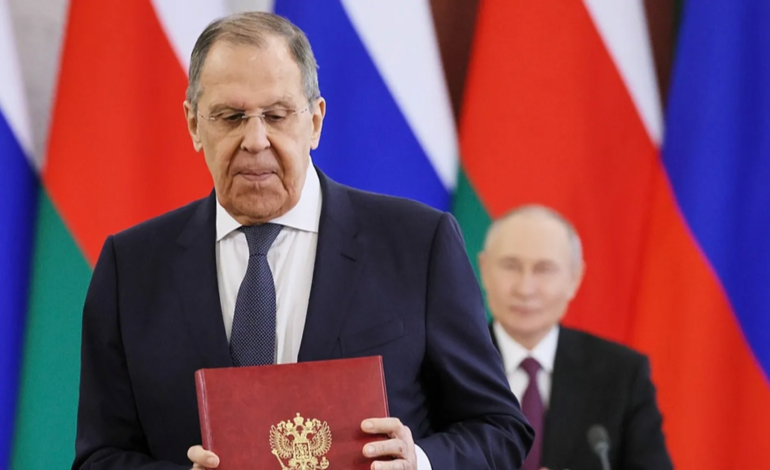
Russian Foreign Minister Sergei Lavrov said the alleged attack occurred overnight between December 28 and 29, involving 91 long-range strike drones launched by what he described as the “Kyiv regime.”
“On the night of December 28–29, the Kyiv regime carried out a terrorist attack using 91 long-range strike drones against the state residence of the President of the Russian Federation,” Lavrov said in a statement.
According to Lavrov, all incoming drones were intercepted and destroyed by Russian air defence systems. He said there were no casualties and no damage reported, including from falling debris.
Lavrov stressed that the alleged attack came at a particularly sensitive moment, coinciding with intensified diplomatic contacts between Moscow and Washington aimed at addressing the ongoing conflict in Ukraine.
“This reckless action was undertaken precisely when Russia–US negotiations were underway to seek ways toward resolving the Ukrainian crisis,” he said.
The Russian foreign minister warned that such actions would not go unanswered, confirming that Russia’s armed forces had already identified targets for retaliatory strikes and determined the timing of their execution.
“At the same time, I want to emphasise that Russia has no intention of withdrawing from the negotiation process with the United States,” Lavrov added, signaling Moscow’s intent to pursue diplomacy alongside military measures.
Ukraine strongly rejected the accusation. President Volodymyr Zelensky on Monday dismissed the claim as “another lie from the Russian Federation,” saying it was designed to create a pretext for further Russian attacks on Ukrainian cities and government institutions.
“This alleged ‘strike on a presidential residence’ is a complete fabrication,” Zelensky said. “They are simply preparing the ground to carry out strikes, probably on the capital and probably on government buildings.”
Zelensky accused Moscow of routinely using disinformation to justify its own military actions, including air strikes on Kyiv and other major Ukrainian cities.
He said Ukraine does not take steps that could undermine ongoing diplomatic efforts but claimed Russia consistently does so. “We are interested in ending this war through just means,” Zelensky said, adding that false allegations only escalate tensions and obstruct meaningful negotiations.
The conflicting statements highlight the deep mistrust between Moscow and Kyiv as the nearly three-year-long conflict continues with no comprehensive ceasefire in place. Drone warfare has increasingly become a central feature of the conflict, with both sides accusing the other of launching long-range attacks on strategic and symbolic targets.
While Russia has reported a growing number of attempted drone strikes on its territory in recent months, Ukraine has maintained that its military actions are defensive and aimed at countering Russian aggression.
The incident comes amid renewed international attention on possible diplomatic pathways to de-escalation, particularly as Washington and Moscow explore limited channels of dialogue. However, sharp accusations such as the one over the Novgorod residence underscore the fragility of those efforts.
As of now, independent verification of the alleged drone attack remains unavailable, and no visual evidence has been released by Russian authorities.