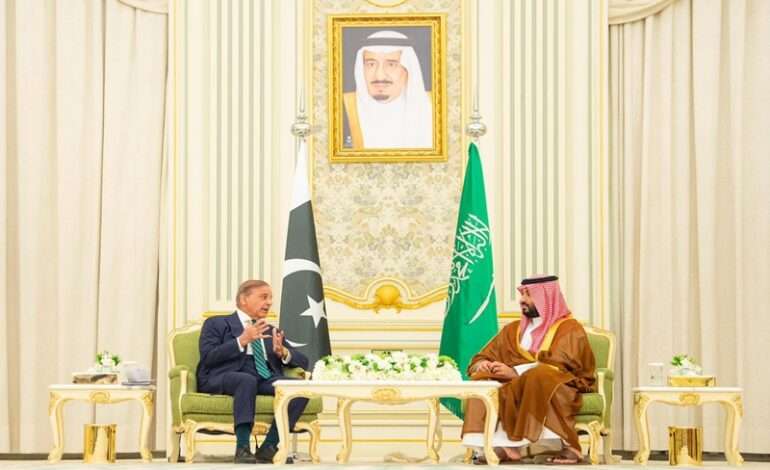
Saudi-Pakistan defence pact sparks debate over prospects of an ‘Arab NATO’

The Saudi Arabia–Pakistan Strategic Mutual Defence Agreement, announced on September 17, has set off speculation about whether it could be the first step toward an “Arab NATO.” The pact enshrines a collective defence principle, declaring that aggression against one will be treated as aggression against both.
The arrangement formalises a decades-old relationship. Riyadh has long extended financial aid and subsidised oil to Islamabad, while Pakistan has stationed troops in the Kingdom and provided military training. Saudi Arabia’s role as custodian of Islam’s holy sites and Pakistan’s claim as the “fortress of Islam” have further cemented the bond.
For Pakistan, the pact offers symbolic prestige and reassurance of external backing. For Saudi Arabia, it signals autonomy in Gulf security amid regional turbulence. However, Egypt has voiced frustration, arguing that the deal undermines Cairo’s earlier vision of a unified Arab army.
India has responded cautiously. While the Ministry of External Affairs promised to “study the implications,” former foreign secretary Kanwal Sibal warned the move could embolden Pakistan, shield it diplomatically, and complicate India’s Gulf partnerships.
Beyond South Asia, the agreement is closely watched in Israel, which sees risks for regional normalisation, and Iran, which views it as Sunni alignment against its influence. For global powers, reactions diverge: the U.S., still the Gulf’s main security provider, may see it as a challenge, while China, Pakistan’s all-weather ally, could exploit it to expand influence in both Riyadh and Islamabad.
Yet, the pact’s ambiguity leaves questions unanswered. The definition of “aggression,” whether it includes cyberattacks or proxy violence, remains vague. This flexibility provides reassurance to partners like India but also increases risks of miscalculation.
Whether this deal evolves into a full-fledged Islamic alliance or remains symbolic, it has undoubtedly altered the regional strategic landscape.