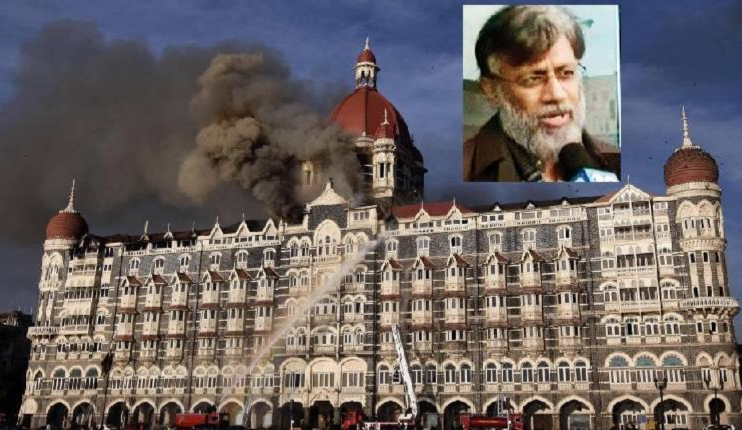
Tahawwur Rana not yet on plane to India, US ‘evaluating’ options

The United States’ State Department is “evaluating next steps” regarding the extradition of Tahawwur Rana to India, a decision upheld last week by the country’s Supreme Court. This clears the way for Rana to finally face justice for his alleged role in the 2008 Mumbai terrorist attacks.
Rana, of Pakistani descent, is connected to David Coleman Headley, who is serving a long prison sentence in the US after pleading guilty to his involvement in the 2008 terrorist attacks. Headley reached a deal with American authorities, which protects him from extradition.
“In view of the recent Supreme Court decision, and consistent with applicable US law, the Department of State is currently evaluating next steps in this case,” a State Department spokesperson said in response to an IANS request. “We have long supported India’s efforts to ensure the perpetrators of the Mumbai terrorist attacks face justice,” the spokesperson added.
The US has been supportive of India’s efforts to bring the perpetrators of the attacks, which killed 167 people—including six Americans— and injured hundreds, to justice. The US has also pressured Pakistan, where the terrorists of Lashkar-e-Toiba were based and trained by the country’s Intelligence service, to punish those responsible.
Additionally, the US assisted India in its case before the UN Security Council to designate Masood Azhar, the founder of Lashkar-e-Taiba, as an international terrorist, blocking Chinese attempts to prevent the move.
However, it remains unclear when Rana will be sent to India.
Rana was arrested by US authorities in October 2009, two weeks after Headley’s arrest, on charges including conspiracy to provide material support to terrorism in India, Denmark, and to a foreign terrorist organization, according to US court documents.
Rana was convicted in 2011 on charges related to the Denmark conspiracy and supporting Lashkar, but was acquitted on charges related to the Mumbai attacks. He was sentenced to 14 years in prison, but after serving half of his sentence, he was granted compassionate release in 2020 due to the COVID-19 pandemic.
Meanwhile, India has been pursuing charges against Rana. A Mumbai court issued an arrest warrant for him in August 2018 on charges including conspiracy, waging war, murder, and terrorism related to the attacks. India then requested his extradition.
Following Rana’s release, the US Department of Justice filed for his provisional arrest in response to India’s extradition request. A US court rejected Rana’s claims in May 2023, certifying his extradition and dismissing his arguments that his extradition was barred under the Non Bis in Idem provision of the US-India Extradition Treaty and that India’s evidence did not establish probable cause for the charges.
Rana argued he should not be extradited for charges he had been acquitted of in the US. However, his claims have been rejected by every court, and he may have exhausted his legal options.