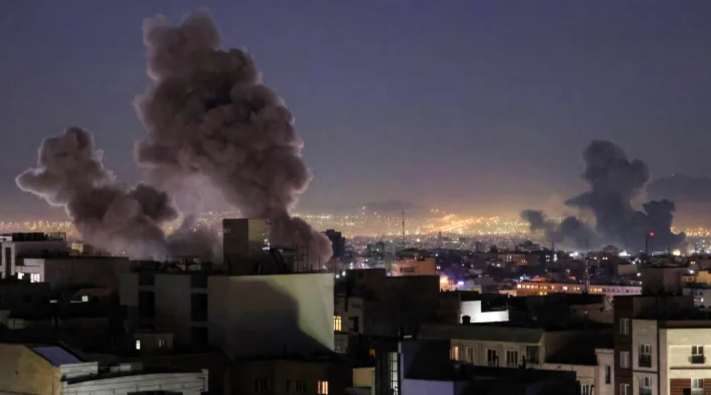
US-Israel airstrikes hit Tehran as conflict escalates sharply

U.S. and Israeli forces carried out a fresh wave of coordinated airstrikes on Tehran early Monday, targeting key military and infrastructure sites in a significant escalation of the ongoing conflict with Iran.
According to initial reports, the strikes hit multiple locations across the Iranian capital, including areas near airports, university-linked facilities, and energy-related infrastructure. Explosions were reported in several districts, with plumes of smoke seen rising over parts of the city.
Iranian authorities have yet to release a full assessment of the damage or confirm casualties, but state-affiliated media acknowledged that several strategic sites were targeted. The attacks come amid intensifying hostilities following weeks of military exchanges between Iran and a U.S.-Israel alliance.
The latest strikes mark one of the most direct assaults on Tehran since the conflict began, raising concerns about a further widening of the war. Analysts say targeting infrastructure in the capital signals a shift toward more aggressive tactics aimed at weakening Iran’s operational capabilities.
The escalation follows a series of Iranian retaliatory attacks across the Gulf region, including drone and missile strikes on energy and industrial facilities in countries such as Kuwait, Bahrain, and the United Arab Emirates. Those incidents have heightened fears of a broader regional conflict affecting critical supply chains and energy markets.
In Washington, officials have maintained that the strikes are part of ongoing military operations designed to counter Iranian threats. However, the absence of immediate official confirmation on specific targets has left questions about the full scope and objectives of the mission.
Meanwhile, Israel’s military stated that it had completed a wave of operations against what it described as “regime targets,” indicating coordination with U.S. forces. The strikes reportedly focused on locations linked to Iran’s military and logistical networks.
The attacks come at a time when diplomatic efforts to secure a ceasefire remain stalled. Iran has rejected proposals for a temporary truce, insisting on a permanent end to hostilities, while the United States has continued to apply pressure through both military and diplomatic channels.
As tensions continue to escalate, the situation in Tehran underscores the fragile security environment in the region. Experts warn that continued strikes on major urban centers could lead to unintended consequences, including civilian casualties and further destabilization.
With both sides showing no signs of backing down, the conflict appears poised to enter a more dangerous phase, with global implications.