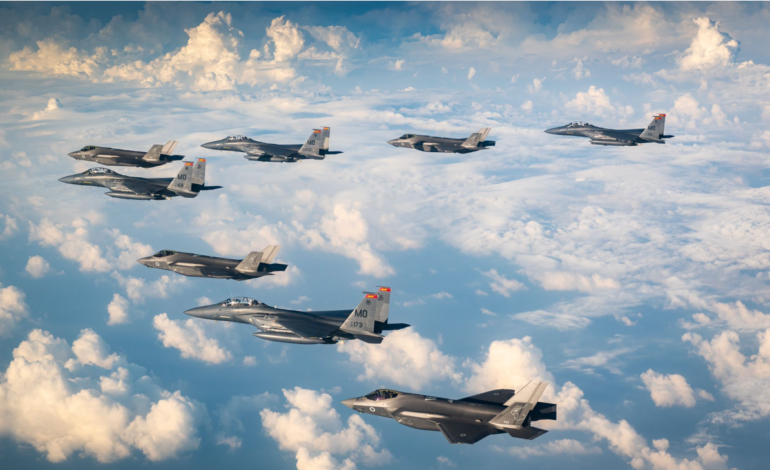
Is Trump planning an Iran attack? US sends 50 F-35, F-16 jets to Middle East

The United States has significantly expanded its military presence near Iran, deploying more than 50 advanced fighter jets to West Asia even as nuclear negotiations between Washington and Tehran show signs of cautious progress.
According to US media reports, the aircraft include F-35, F-22 and F-16 fighter jets repositioned to the region within the past 24 hours. The buildup comes amid ongoing diplomatic efforts in Geneva, where US and Iranian officials described recent talks as constructive but acknowledged that substantial differences remain.
US officials said the two sides “made progress” in discussions over Iran’s nuclear programme, though many technical details are yet to be resolved. Iranian Foreign Minister Seyed Abbas Araghchi described the latest round as more constructive than earlier talks held in Muscat, adding that both sides had agreed on guiding principles for a potential framework.
Expanding US military footprint
The fresh deployment adds to an already sizable US presence in the region. The USS Abraham Lincoln aircraft carrier was dispatched to the Arabian Sea in late January. Additional assets reported in recent weeks include F-15 fighter jets, MQ-9 Reaper drones, A-10C ground-attack aircraft, surveillance planes, and guided-missile destroyers transiting strategic waterways.
Satellite imagery has also indicated the movement of US naval vessels through the Suez Canal and increased reconnaissance operations over the Gulf.
The military reinforcement comes amid heightened tensions over Iran’s nuclear ambitions and domestic unrest. Analysts suggest the deployments may be intended as deterrence rather than preparation for immediate military action.
Iran signals military drills
Iran, for its part, announced plans to temporarily close sections of the Strait of Hormuz for military exercises. The waterway is a critical global energy chokepoint, handling a substantial share of the world’s oil exports. While Tehran has previously threatened to shut the strait entirely, it has never followed through on such action.
Diplomacy continues
Despite the visible military buildup, both sides appear committed — at least publicly — to pursuing diplomacy. Iranian officials said the next step involves drafting and exchanging texts outlining a potential nuclear agreement before setting a date for a third round of talks.
A breakthrough could lead to the lifting of sweeping US sanctions on Iran’s oil sector in exchange for significant restrictions on Tehran’s nuclear activities. However, officials on both sides caution that negotiations are entering a more detailed and difficult phase.