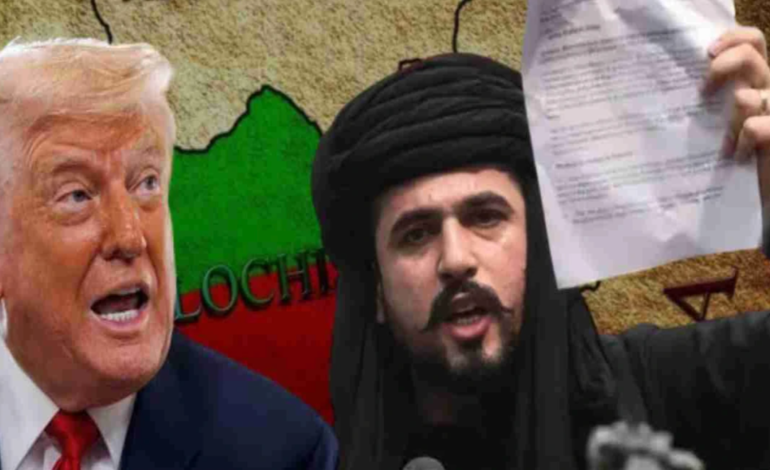
Baloch activist urges Trump to cancel $686 million US military aid to Pakistan over human rights concerns

A prominent Baloch human rights activist has appealed to US President Donald Trump to immediately cancel a recently approved $686 million US military aid package to Pakistan, warning that the funds could be used to intensify repression and violence against civilians in Balochistan.
Mir Yar Baloch, a leading voice highlighting alleged human rights violations in the region, raised serious concerns over the approval of the military assistance, which includes an F-16 sustainment and upgrade programme. In a strongly worded letter addressed to President Trump, he urged Washington to reconsider what he described as a dangerous decision that could further empower Pakistan’s military against the Baloch population.
The activist said the Baloch people have endured more than seven decades of what he described as occupation marked by enforced disappearances, targeted killings and systematic suppression. He alleged that many of these actions have been carried out using US-supplied weapons, arguing that continued military support risks making the United States complicit in human rights abuses.
“With the highest respect for you personally and for the great American people, we make this direct, solemn, and urgent plea,” Mir wrote in the letter. He called on the US administration to “immediately revoke and permanently cancel” the entire military package, including the $686 million allocated for F-16 upgrades and associated security assistance.
According to Mir, these aircraft and weapons systems are not used for defensive purposes but have allegedly been deployed in operations that have harmed civilians. He claimed that Baloch civilian areas have been bombed, women and children killed, and community leaders targeted during military actions.
The activist also accused Pakistan of duplicity in its relationship with the United States, recalling that Osama bin Laden was found living in Pakistan despite the country receiving billions of dollars in US aid meant for counterterrorism. He alleged that funds provided to fight terrorism were instead misused and, in some cases, turned against American interests and regional stability.
Mir further referenced a 2012 hearing held by the US House Committee on Foreign Affairs Subcommittee on Oversight and Investigations, chaired at the time by Congressman Dana Rohrabacher. The hearing, titled “The Crisis in Balochistan,” examined allegations of serious human rights abuses in the province. According to Mir, US lawmakers acknowledged during that session that American-supplied weapons were being used against Baloch civilians and recognised the gravity of the humanitarian situation.
He argued that the moral clarity expressed by US lawmakers more than a decade ago should now translate into concrete policy action. Calling 2025 a critical moment, Mir urged President Trump to suspend all military financing and security assistance to Pakistan until an independent review ensures that no US-supplied equipment is used against civilian populations.
The appeal adds to ongoing international scrutiny of Pakistan’s human rights record in Balochistan and raises broader questions about the implications of foreign military aid. While the US has long viewed Pakistan as a strategic partner, critics argue that continued military support without strict safeguards risks undermining human rights and long-term regional stability.
The Trump administration has not publicly responded to the letter, but the issue is likely to resonate among human rights groups and policymakers closely watching US-Pakistan relations and the situation in Balochistan.