India and G4 nations reject religious criteria for UNSC reform

India, along with its G4 partners Brazil, Germany, and Japan, has firmly rejected proposals that advocate allocating seats on the reformed UN Security Council (UNSC) based on religious affiliation.
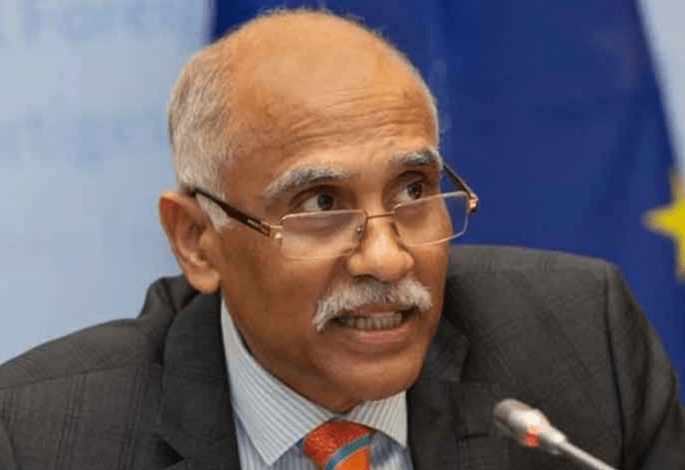
Speaking on behalf of the G4 at a meeting of the Intergovernmental Negotiations (IGN) on UNSC reform, India’s Permanent Representative to the UN, P. Harish, emphasized that introducing religion as a criterion contradicts established UN practices and would complicate an already challenging reform process.
Although Harish did not name specific nations, the remarks appear to respond to recent statements by Turkish President Recep Tayyip Erdogan and proposals from Pakistan and the Organisation of Islamic Cooperation (OIC). Erdogan had suggested that an Islamic country should become a permanent member of the UNSC, while the OIC previously called for representation of the “Islamic Ummah” in all membership categories.
Harish reiterated that any move to prioritize religion over regional representation undermines the long-standing UN principle of equitable regional distribution.
“Attempts to introduce new parameters such as religion and faith as a basis for representation in a reformed Council run completely counter to regional representation,” Harish said while also speaking in his national capacity.
The G4 nations advocate for expanding the UNSC to include 25 or 26 members, with six new permanent seats and up to five new non-permanent seats. The proposed allocation of permanent seats would include two for Africa, two for the Asia-Pacific, and one each for Latin America and the Caribbean, and Western Europe and others.
Harish noted that while the G4 supports expansion, it refrains from nominating specific countries for permanent membership, leaving that decision to the UN General Assembly.
Addressing resistance from the United for Consensus (UfC) group, which opposes new permanent members and blocks progress toward a negotiating text, Harish accused them of hindering meaningful reform.
“Those opposed to text-based negotiations do not seek progress on reforms,” he stated, arguing that concerns over efficiency are used as excuses to delay real change.
Meanwhile, Bank of Japan Governor Kazuo Ueda and other policymakers have also weighed in on the potential global economic impact of a stalled or inefficient UNSC, further emphasizing the urgency of reform.
Erdogan, positioning himself as a spokesperson for the Muslim world, has stated that including an Islamic nation among the Council’s permanent members is a necessity. However, critics argue that religion-based representation could set a troubling precedent and contradict the inclusive and secular foundations of the United Nations.
In contrast, the G4 countries maintain that reforms should reflect current geopolitical realities and prioritize balanced regional representation over religious or ideological factors.