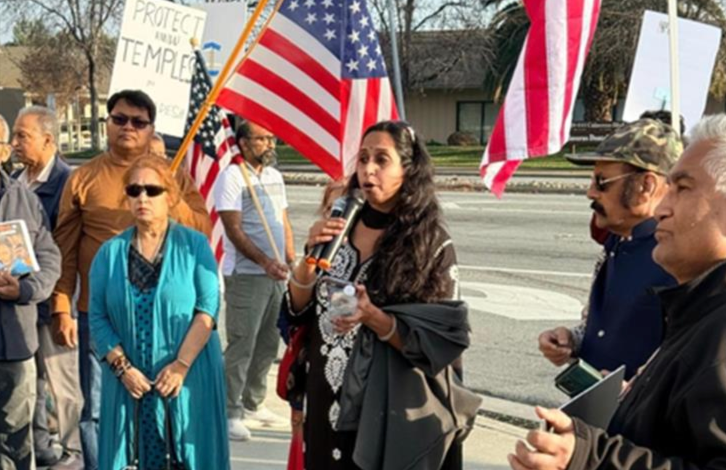
Hindu American Foundation challenges caste-Hinduism link in US appeals court

The Hindu American Foundation (HAF) has moved a US appeals court, challenging what it describes as the wrongful linking of caste discrimination to Hinduism by California’s civil rights regulator in a case with far-reaching implications for workplaces across the United States.
In a reply brief filed on April 6 before the Ninth Circuit Court of Appeals, HAF urged the court to remove procedural barriers that led a lower court to dismiss its lawsuit against the California Civil Rights Department (CRD). The foundation argued that the district court failed to examine the substance of its claims.
At the center of the dispute is HAF’s allegation that the CRD’s enforcement approach “explicitly and implicitly” associates caste with Hinduism and targets Indian and South Asian communities, thereby singling out a minority group.
The controversy stems from a high-profile case filed by the CRD against Cisco Systems and two of its managers, accusing them of caste-based discrimination under California’s Fair Employment and Housing Act. The regulator had publicly framed the lawsuit as a landmark action addressing caste bias in the workplace.
HAF contends that the CRD’s framing relies on what it calls “racist and demonstrably false tropes,” including earlier references describing caste as a “strict Hindu social and religious hierarchy.” While the CRD has since removed that specific phrasing, it maintains that the issue is now moot.
However, HAF argues that the underlying problem remains unresolved. “Removing the phrase doesn’t change the fact that the CRD is attempting to direct caste policies solely at Indian, South Asian, and Hindu employees,” the foundation said in its filing.
Needhy Shah, HAF’s Senior Legal Director, warned that the implications extend beyond a single case. She said the regulator’s approach risks misusing enforcement powers by targeting the very communities it is meant to protect.
“The Hindu American, Indian American, and South Asian American communities are concerned—and should be,” Shah said, adding that the case could set a precedent for how caste is interpreted under US civil rights law.
The Ninth Circuit’s decision on whether to revive the case is expected to influence broader legal and policy debates around caste discrimination, particularly in sectors like technology where South Asian representation is significant.
As discussions around caste continue to evolve in the United States, the case highlights the tension between efforts to address discrimination and concerns about stereotyping entire communities based on religion or ethnicity.