India garment exporters diversify beyond US market after tariff shock

India’s garment manufacturers are reducing their dependence on the United States following tariff increases that disrupted orders, squeezed profit margins and created uncertainty for exporters. Even if New Delhi and Washington reach a trade agreement, industry leaders say they are unlikely to return to their earlier level of reliance on the American market.
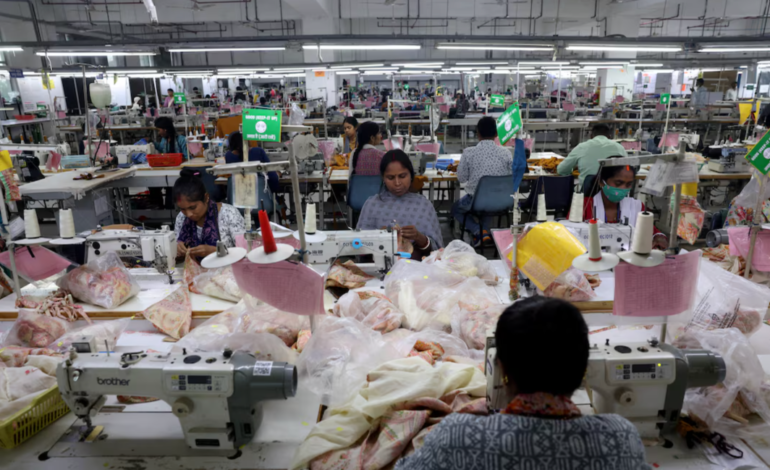
Orient Craft, a major Indian garment manufacturer, has shifted much of its production toward Britain, Europe and the domestic market. Its founder, Sudhir Dhingra, said the company had reduced the US share of its sales from 84% before the tariff increases to less than 10%. The company previously supplied American retailers, but higher duties led some US buyers to cancel orders or demand discounts from manufacturers.
Other exporters are following a similar strategy. Gokaldas Exports, which employs more than 53,000 people, plans to increase Europe’s contribution to its revenue from around 15% to 16% to 25% to 30% over the next three to five years. It also aims to reduce its US exposure from 50% to 55% to 35% to 40%.
The shift is reflected in trade figures. Between April and August 2026, India’s textile, apparel and home-furnishings exports to the US declined 9.8% year over year to $4 billion. Shipments to other markets increased 3.7% to $15.2 billion. The US share of India’s exports also fell to 25.4% by August, compared with 28.3% in 2022.
Exporters are increasingly targeting Britain, the European Union and the United Arab Emirates. The India-UK trade agreement, which took effect in July, provides duty-free access for Indian clothing exports to the British market. A proposed trade agreement with the European Union could also remove duties currently ranging from 12% to 17%.
Manufacturers are simultaneously exploring lower-cost production locations. Ranchi, in Jharkhand, is attracting garment companies through government incentives, easier access to land and a reliable workforce. Gokaldas Exports plans to open another factory there, potentially creating up to 4,600 jobs.
India’s domestic apparel market, valued at approximately $150 billion and growing 7% to 8% annually, is another important source of stability.
Although exporters do not intend to abandon the US market, the tariff disruption has prompted a long-term reassessment. Diversifying markets, controlling costs and strengthening domestic sales are increasingly becoming central to India’s garment industry’s growth strategy.