India, not Pakistan, is America’s long-term strategic partner: US lawmakers

Senior US lawmakers have underscored that India, not Pakistan, remains the United States’ long-term strategic partner, making clear that periodic engagement with Islamabad should not be mistaken for a shift in Washington’s strategic priorities.
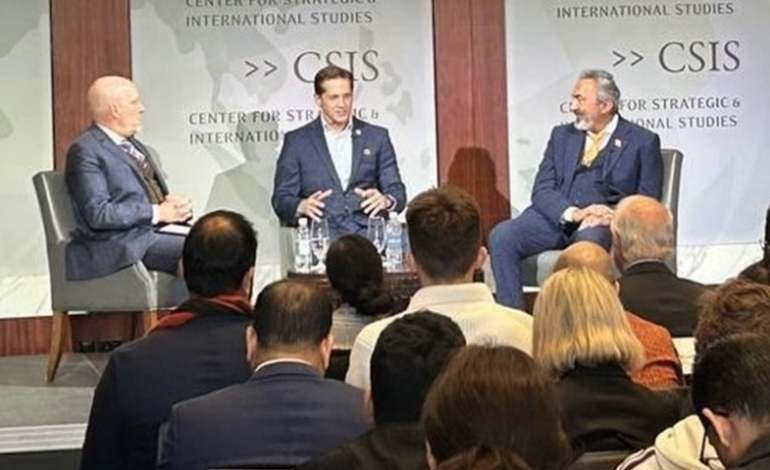
Speaking at a discussion hosted by the Center for Strategic and International Studies (CSIS), Congressman Ami Bera emphasised that diplomatic interactions with Pakistan do not amount to a strategic partnership. “We’re not creating a strategic partnership with Pakistan,” Bera said, pushing back against perceptions fueled by recent political rhetoric.
Bera acknowledged that comments and gestures by US leaders can sometimes generate unease in New Delhi. Referring to recent diplomatic interactions, he noted that the US President had made remarks about Pakistan and hosted Pakistani leaders at the White House during the same period when US officials were engaging India.
However, he stressed that economic and strategic realities clearly point toward India as Washington’s preferred long-term partner. “You don’t see American companies making multibillion-dollar investments in Pakistan. That’s all happening in India,” Bera said, highlighting where US corporate confidence and capital are flowing.
Congressman Rich McCormick echoed this assessment, describing India as indispensable to regional and global stability. “There is no more important friend that we’re going to need for the future of not just the United States and India, but for the entire stability of the world, than India,” he said.
Both lawmakers underlined that Pakistan does not feature prominently in Washington’s long-term Indo-Pacific strategy, which is increasingly centered on democratic partnerships, economic integration, and shared strategic interests. Bera noted that India’s role in US foreign policy has remained consistent across administrations of both parties.
“If you go back to the Clinton administration, through the Bush administration, through Obama, to Trump 1.0, to Biden, India’s been very key to our whole Indo-Pacific strategy,” Bera said, pointing to continuity in bipartisan thinking on India.
He also contrasted the strong investor confidence in India with the lack of comparable momentum in Pakistan. According to Bera, business communities clearly understand the long-term direction of US engagement in South Asia. “We’re playing the long game,” he said.
McCormick highlighted shared democratic values and economic principles as the foundation of the US–India partnership. “The commonality we have in the way we look at economics and freedom and advancement of a people,” he said, sets India apart.
While acknowledging India’s independent foreign policy choices, McCormick said Washington recognises New Delhi’s need to prioritise domestic growth and energy security. “He’s doing it for the best interest of his country,” McCormick said, referring to India’s leadership and policy decisions.
The remarks reflect a growing consensus in Washington that India remains central to US strategic planning in the Indo-Pacific and beyond.