India seen as pivotal in US strategy to counter China on AI, critical minerals

The United States is positioning India as a strategic pillar in its push to reduce China’s dominance over rare earth minerals and advanced technology supply chains, a senior State Department official told lawmakers during a high-profile congressional hearing on economic security.
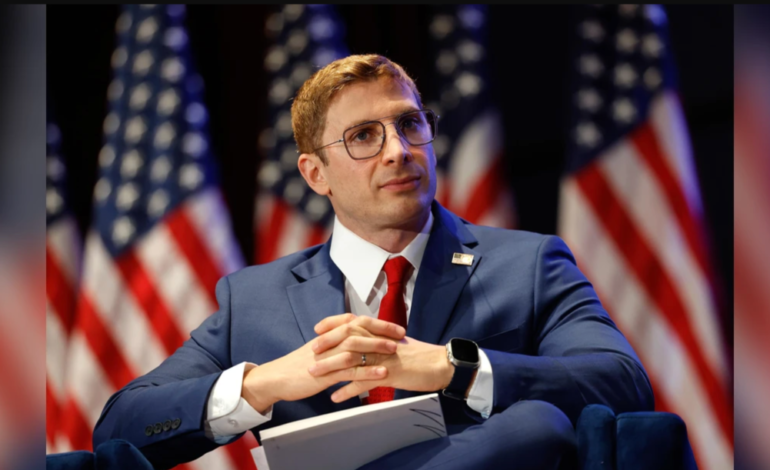
Testifying before the House Foreign Affairs Committee, Undersecretary of State for Economic Growth, Energy and Environment Jacob Helberg said India has formally joined the US-led “Pax Silica” coalition — an initiative aimed at securing supply chains for critical minerals, semiconductors and artificial intelligence among allied nations.
“Just last week we welcomed India into the fold,” Helberg said, describing Pax Silica as “an economic security coalition for the AI century designed to secure the supply chain infrastructure that underlies national power.”
AI and industrial power
Helberg told lawmakers that control over the industrial foundations of artificial intelligence would define global leadership in the decades ahead.
“The nation that controls the industrial foundations of artificial intelligence will lead this century. The nation that doesn’t will depend on those who do,” he said.
He highlighted India’s strategic advantages, arguing that New Delhi offers both a deep talent pool and significant refining capacity.
“India is probably the only country in the world that rivals China in terms of the depth of its human capital and talent,” Helberg said, adding that it is also the world’s third-largest mineral refiner.
China currently processes roughly 90 per cent of global rare earth refining capacity, he noted, calling the concentration of supply chains in one country a “fundamental challenge” the US is working urgently to address.
Diversifying supply chains
According to Helberg, Washington’s strategy includes expanding refining capacity in allied nations through brownfield projects and mobilising private capital into mining and mineral processing ventures in countries such as India, Australia and South Korea.
He said the broader approach combines economic coordination, export controls and supply chain diversification to counter what US officials view as Beijing’s strategic use of trade and industrial policy.
“China has not made a secret of its plans and intentions to decouple from us,” he said. “The question is, are we comfortable staying dependent on them while they actively try to decouple from us?”
Growing US-India alignment
While the hearing revealed partisan differences over tariff policy, there was bipartisan agreement on the risks posed by China’s dominance in critical minerals and advanced manufacturing.
Helberg noted that 55 countries recently participated in a US-led critical minerals ministerial exploring alternatives to Chinese-controlled supply chains. He also pointed to a recent US-India joint statement on trade that includes expanded energy purchases and deeper cross-border investment.
“I’m incredibly confident in the trajectory of the US-Indian relationship,” he said. “It’s incredibly strong.”
The remarks underscore India’s growing role in Washington’s economic security calculus, particularly as the two countries expand cooperation on critical and emerging technologies and within strategic groupings such as the Quad.