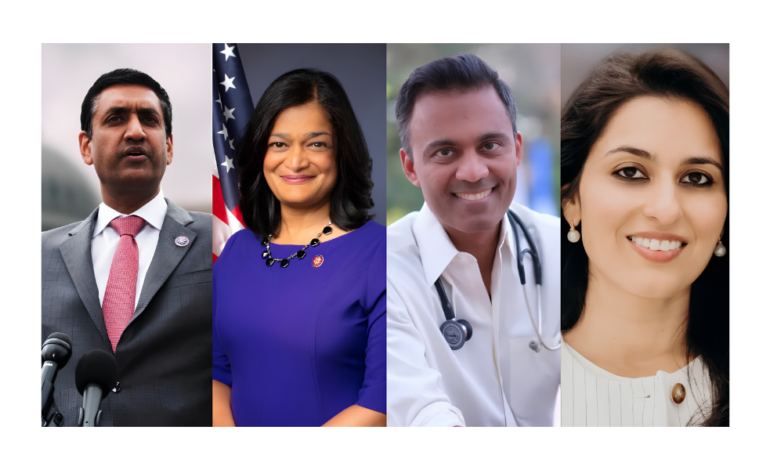
Indian Americans score key victories in 2026 US midterms; Amish Shah leads in Arizona

Indian-American candidates recorded significant victories in the November 3, 2026, US midterm elections, winning congressional and state-level contests across the country. Democrat Dr. Amish Shah emerged as a key contender in Arizona, while several prominent Indian-American politicians secured re-election. However, Republican candidates Vivek Ramaswamy and Saritha Komatireddy suffered defeats in high-profile statewide races.
Among the projected winners were Pia Dandiya in Florida, Suhas Subramanyam in Virginia, Pramila Jayapal in Washington state, Ro Khanna in California and Maryland Lieutenant Governor Aruna Miller.
In Florida, Dandiya, a former school principal whose parents immigrated from India, defeated Republican Casey Askar in the 22nd Congressional District, securing approximately 52 percent of the vote against his 48 percent.
In Virginia, Democratic Congressman Suhas Subramanyam won re-election from the 10th Congressional District, defeating Republican Dave Beckwith. Following his victory, Subramanyam said, “The campaign is over, but the work is just beginning.”
Maryland Lieutenant Governor Aruna Miller also secured another four-year term after Democratic Governor Wes Moore won re-election.
On the West Coast, Pramila Jayapal was projected to retain Washington state’s 7th Congressional District, defeating Republican Nirav Sheth. In California, Ro Khanna won re-election in the 17th Congressional District, defeating Republican Ritesh Tandon.
Fellow Indian-American Congressman Ami Bera was leading Republican Robb Tucker by approximately 60 percent to 40 percent in California’s newly redrawn 3rd Congressional District, although the race remained uncalled.
Amish Shah leads in Arizona
One of the closely watched contests involved Democrat Dr. Amish Shah, an Indian-American physician and former state lawmaker, who was leading Republican Jay Feely in Arizona’s 1st Congressional District.
According to Decision Desk HQ projections, Shah received 54.9 percent of the vote against Feely’s 43.2 percent, with approximately 76 percent of the expected vote counted. The race had not been officially called.
The district includes Scottsdale and parts of metropolitan Phoenix. A Shah victory would add another Indian-American Democrat to the House of Representatives.
Vivek Ramaswamy, Saritha Komatireddy lose
Among the prominent defeats was Republican Vivek Ramaswamy, who lost the Ohio gubernatorial race to Democrat Amy Acton. Late returns showed Acton with approximately 51 percent of the vote against Ramaswamy’s 46 percent.
In New York, Republican Saritha Komatireddy, a former federal prosecutor, lost the attorney general’s race to Democratic incumbent Letitia James, who secured approximately 62 percent of the vote.
Other Indian-American candidates who lost included Republican Mahesh Ganorkar in North Carolina, independent Sandeep Dixit in Ohio and independent Anil Kumar in Michigan congressional contests.
Indian Americans make gains in state legislatures
Indian-American candidates also recorded strong performances in state legislative elections.
Democrat Arvind Venkat won re-election in Pennsylvania’s House District 30, while Ram Villivalam retained Illinois Senate District 8.
In Illinois Senate District 26, Democrat Nabeela Syed was leading Republican incumbent Darby Hills by approximately 57 percent to 43 percent, with more than 95 percent of estimated votes counted. The race remained uncalled.
In Georgia, Democrat Jyot Singh was leading Republican Yassin Moghazy by approximately 68 percent to 32 percent in House District 97.
In Texas, Democrat Pooja Sethi also declared victory in House District 47.
The November 3 midterm elections are determining control of the US Congress, including all 435 House seats and 35 Senate seats, along with governorships and state legislative positions.
The results highlight the growing presence and political influence of Indian Americans across the US electoral landscape, with candidates making their mark in congressional, statewide and local legislative contests.