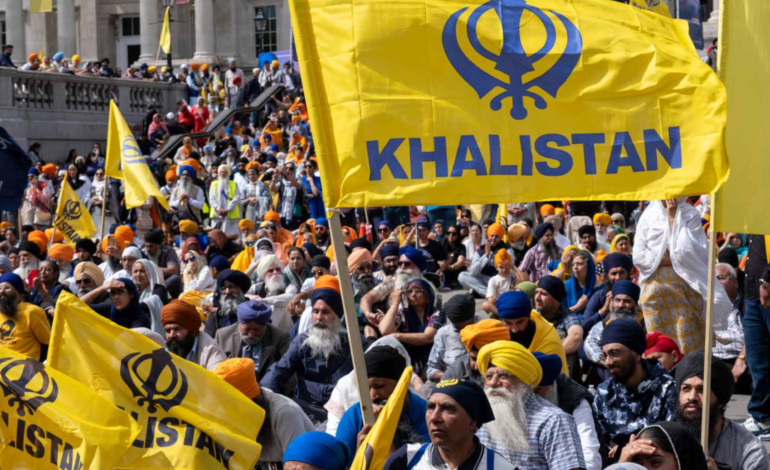
Pakistan using films to advance anti-India narrative, promote Khalistani agenda: Report

Pakistani cinema and cultural platforms are increasingly being used to propagate an anti-India narrative and promote the Khalistani agenda, raising serious concerns about the politicisation of art, religion, and heritage, according to a new report. Analysts warn that this strategy not only deepens regional tensions but also undermines the sanctity of religious symbols and sacred spaces by turning them into instruments of state-driven political messaging.
The report notes that individuals and groups who face legal or regulatory barriers in India while attempting to produce content linked to Khalistan are finding a permissive environment in Pakistan. According to the analysis, Pakistan has emerged as a convenient base where such projects can be executed without restriction and then amplified globally through social media networks. Once released, this content is rapidly circulated online, targeting diaspora audiences and attempting to reignite separatist sentiment through emotive imagery and selective historical narratives.
Observers cited in the report argue that this trend reflects a broader pattern within Pakistan’s information ecosystem, where cinema, television, and digital platforms are increasingly mobilised to distract from domestic challenges. While India, including Indian Punjab, continues to draw global attention for economic growth, institutional reforms, and social development, the report contrasts this with Pakistani Punjab, which it says remains mired in corruption, governance failures, and economic stagnation. Rather than addressing these structural issues, critics allege that Islamabad has leaned heavily on anti-India narratives to shape public discourse and redirect popular frustration outward.
The report further highlights that the weaponisation of cinema in Pakistan is not a new phenomenon. For decades, Pakistani films and television serials have portrayed Sikh characters through narrow and often controversial stereotypes. Sikh women, in particular, have frequently been depicted within tropes centred on forced or romanticised religious conversion, narratives that many Sikh scholars and community leaders describe as ideologically biased and deeply offensive. Such portrayals, the report argues, contribute to cultural misrepresentation while reinforcing divisive political messaging.
One of the most contentious issues flagged in the report is the filming of movies and music videos at sacred Sikh sites, especially Nankana Sahib, the birthplace of Guru Nanak Dev Ji. Sikh religious authorities and community organisations have strongly condemned this practice, describing it as beadbi, or desecration. They stress that gurdwaras are spaces dedicated exclusively to worship, seva (selfless service), and spiritual reflection centred on the Guru Granth Sahib Ji. Using these holy sites for commercial filmmaking or political symbolism, critics argue, violates core Sikh religious principles and disrespects centuries-old traditions.
Beyond geopolitics, the controversy has sparked deeper introspection within sections of the Sikh community. The report notes growing discomfort over what many see as complicity by a small number of individuals who, driven by financial incentives, visibility, or perceived institutional protection, appear willing to compromise religious sanctity. This, critics say, risks eroding communal dignity and trust, while providing external actors with opportunities to exploit internal divisions.
The report concludes that Pakistan’s use of cinema and cultural production as a political tool reflects a calculated effort to advance ideological objectives under the guise of artistic expression. By blending religious symbolism, historical grievance, and entertainment, such content seeks to influence perceptions far beyond Pakistan’s borders. Analysts warn that unless checked, this trend could further inflame regional sensitivities, distort cultural narratives, and deepen mistrust between communities, while hollowing out the credibility of art as a space for genuine creativity and dialogue.