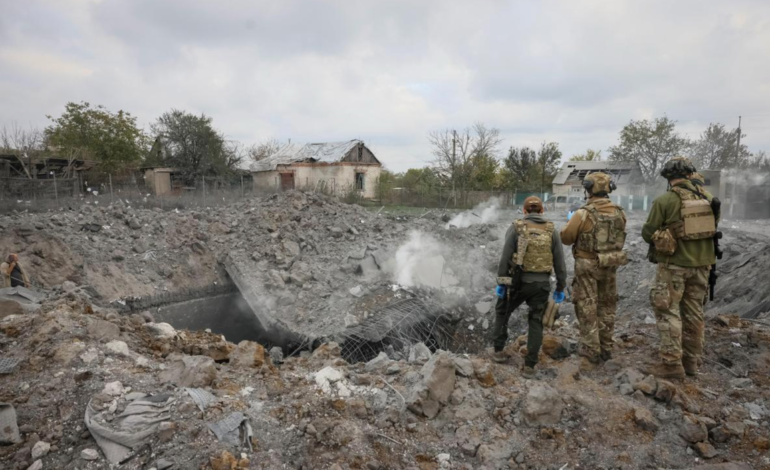
Russian strikes kill 29 in Ukraine as school reduced to rubble ahead of peace talks

Russian attacks across Ukraine have killed at least 29 people, destroyed a school being used as a humanitarian aid distribution centre and wounded dozens more, intensifying concerns over civilian safety ahead of fresh United States-mediated peace negotiations.
The deadliest attack occurred on Monday in the village of Komyshuvakha in the Zaporizhzhia region, where Russian bombs reduced a school building to rubble. The facility had been regularly used to distribute humanitarian assistance to local residents. Ukrainian authorities reported 29 deaths, while rescue workers continued searching for survivors. Acting regional governor Mykhailo Semikin said 48 people were missing as of Tuesday.
Ukrainian President Volodymyr Zelensky condemned the attacks, saying rescue operations were continuing as security conditions permitted. He alleged that Russian forces knew the facility was being used for humanitarian aid distribution.
The attacks continued on Tuesday, with Russia striking several locations across Ukraine. In the central Dnipropetrovsk region, regional leader Oleksandr Ganzha reported two deaths and 20 injuries. In Kharkiv, a Russian strike reportedly hit a hospital, injuring 73 people and damaging its cardiology department while patients were receiving treatment.
Zelensky described the latest assault as a massive attack and questioned Moscow’s intentions as diplomatic efforts to end the war gathered momentum. Speaking during a visit to Berlin, he said the timing of the strikes, coinciding with the United States midterm elections, sent a troubling message.
Zelensky seeks stronger support from Germany
During his visit to Berlin, Zelensky was scheduled to meet German Chancellor Friedrich Merz to discuss strengthening Ukraine’s air defence capabilities and securing support for its energy infrastructure. Germany remains one of Ukraine’s leading military and financial supporters.
The visit comes ahead of fresh negotiations in Abu Dhabi on November 10–11 involving Russian, Ukrainian and United States representatives. US special envoy Steve Witkoff said discussions would cover post-war security arrangements, de-escalation, humanitarian assistance and further steps towards peace.
US officials are also scheduled to meet European and NATO representatives in Brussels to discuss the conflict.
Diplomatic efforts face uncertainty
The renewed violence follows the end of a local ceasefire in Ukraine’s southern Kherson region on Sunday. The temporary truce had facilitated the humanitarian evacuation of civilians from the Russian-occupied town of Oleshky.
Meanwhile, Russia’s Defence Ministry said it had conducted a major strike targeting Ukrainian energy facilities and port infrastructure in the Odesa region. Moscow also reported intercepting nearly 500 drones heading towards the capital region.
As diplomatic initiatives continue, Britain and France have announced military exercises involving approximately 2,800 troops from 10 European countries in Poland. The exercises are intended to prepare a multinational force that could be deployed in Ukraine if a ceasefire agreement is reached.
Despite renewed diplomatic engagement, the latest attacks highlight the significant challenges facing efforts to end the war, which began with Russia’s full-scale invasion of Ukraine in February 2022.