South Korea alarmed as Trump’s Iran stance shakes 72-year alliance

Seoul is facing renewed uncertainty over its long-standing security partnership with Washington after US President Donald Trump ordered a significant reduction in joint military exercises with South Korea, while criticising Seoul for declining to join the US-Israel war against Iran.
The decision came just hours before annual US-South Korea military drills were scheduled to begin and reportedly caught officials in Seoul off guard. Trump said the exercises sent an “inappropriate and hostile” signal to North Korea and pointed to South Korea’s reluctance to support US military action against Iran.
The Pentagon said it was working to implement the directive. US Forces Korea commander General Xavier Brunson subsequently met South Korean Defence Minister Ahn Gyu-back as both sides worked out the changes. The exercise was ultimately reduced from 11 days to five, with several field-training activities scaled back.
The move has reignited concerns about the reliability of the US security commitment that has underpinned South Korea’s defence since the Korean War. It has also intensified domestic debate over whether Seoul should adopt a more independent defence posture.
South Korean President Lee Jae Myung has sought to maintain a measured approach. While reaffirming the importance of the alliance, he called for stronger self-reliant defence capabilities. Lee also signalled that Seoul was willing to discuss practical measures to help maintain freedom of navigation through the Strait of Hormuz, a critical energy route disrupted by the Iran conflict.
The lack of prior consultation has particularly angered some South Korean lawmakers and commentators. Critics argue that major alliance decisions should not be announced through social media without coordination with Seoul.
The Iran war has further complicated the relationship. Trump has publicly questioned why South Korea would not assist the US despite Washington maintaining approximately 39,000 troops on the Korean Peninsula. South Korean public opinion remains divided, with competing calls to support Washington, remain neutral or oppose US military involvement.
The latest developments have also revived discussion about South Korea developing its own nuclear weapons. Analysts warn that continued uncertainty over US commitments could strengthen arguments for nuclear self-reliance, although others caution against an overreaction that could further destabilise the alliance.
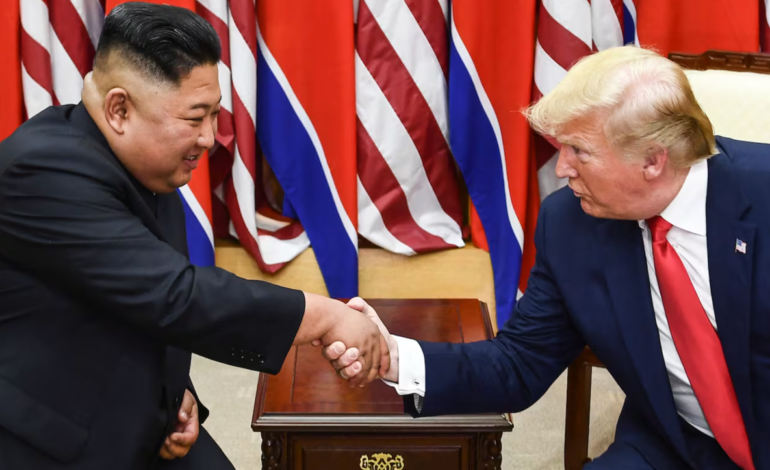
The episode comes as Washington also considers renewed engagement with North Korea. Analysts say any attempt by Trump to reopen talks with Kim Jong Un would face difficult questions over North Korea’s nuclear programme, particularly as Washington is simultaneously confronting Iran over its nuclear ambitions.
For Seoul, the challenge is increasingly clear: preserve the US alliance while strengthening its own strategic autonomy and avoiding unnecessary escalation in a rapidly changing regional security environment.