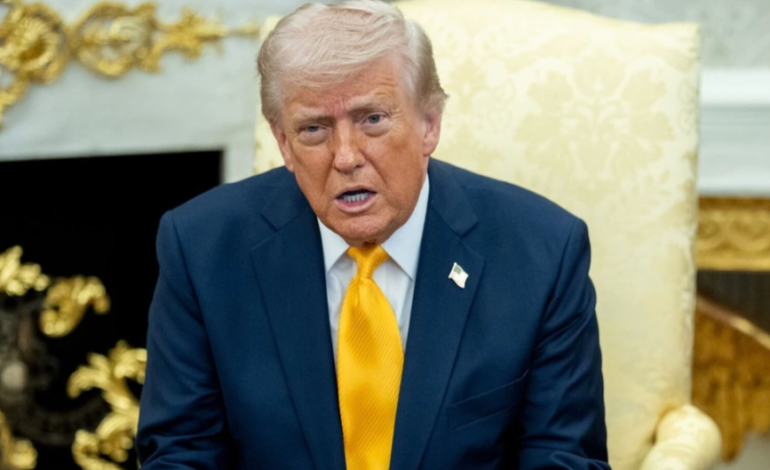
Trump claims regime change underway in Iran, delays power plant strikes by five days

U.S. President Donald Trump on Monday announced a five-day delay in planned military strikes on Iranian power plants and energy infrastructure, citing what he described as “good and productive conversations” with Tehran. At the same time, he claimed that a process of “regime change” is already underway in Iran, signaling confidence in the broader trajectory of U.S. strategy.
The decision to postpone strikes appears aimed at allowing space for potential diplomatic engagement, though no specific details were provided. Trump’s remarks come amid heightened tensions in the region and growing global concern over the economic impact of the conflict.
Iran, however, has denied that any negotiations are taking place. According to Tasnim news agency, an Iranian official said the Strait of Hormuz will not return to pre-war conditions, warning that disruptions to global energy markets are likely to continue. The official emphasized that there are currently no talks underway with the United States, contradicting Trump’s assertion of ongoing discussions.
The Strait of Hormuz remains a critical flashpoint, as it serves as a vital route for a significant portion of the world’s oil supply. Continued instability in the region has already contributed to rising energy prices and increased uncertainty in global markets.
Adding to the concerns, International Energy Agency (IEA) Executive Director Fatih Birol warned that the ongoing crisis represents a “major, major threat” to the global economy. Speaking in Canberra, Birol said that the combined effects of the current conflict could surpass the impact of the oil shocks of the 1970s and the gas market disruptions triggered by the Russia-Ukraine war. He cautioned that no country would be immune if the situation continues to deteriorate.
Meanwhile, Israel has signaled a potential escalation on another front. Officials indicated that preparations are underway for a possible ground campaign into Lebanon, with Israeli forces already destroying key infrastructure, including a strategic bridge. The move is part of Israel’s broader objective to counter Hezbollah, the Iran-backed militant group operating in the region.
The combination of delayed U.S. strikes, conflicting diplomatic signals, and expanding military operations highlights the volatile nature of the crisis. While the temporary pause may offer a narrow window for de-escalation, the absence of confirmed negotiations and continued military build-up suggest that tensions remain high.
As the situation evolves, the risk of a wider regional conflict—and its far-reaching economic consequences—continues to loom large.