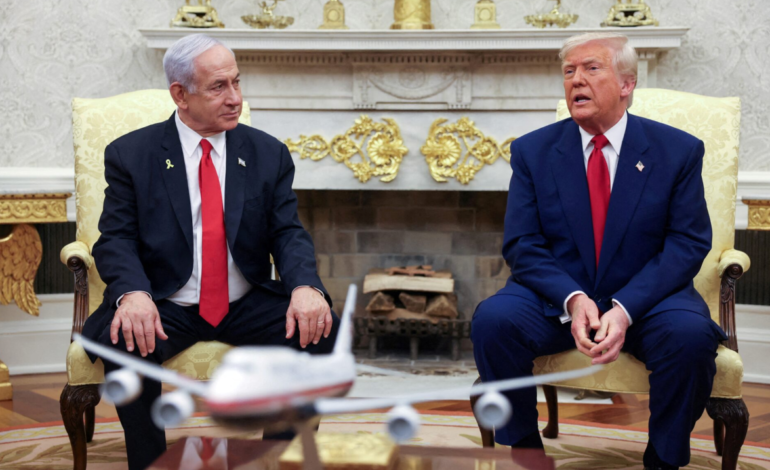
US and Israel prepare for possible Iran strikes as Trump holds call with Netanyahu

US President Donald Trump has reportedly held a telephone conversation with Israeli Prime Minister Benjamin Netanyahu as Washington considers a possible new round of military strikes against Iran following the US midterm elections. The reported discussion comes amid ongoing diplomatic efforts to prevent the conflict from escalating further.
According to a report by The Wall Street Journal, the two leaders spoke on Saturday morning as US officials reviewed plans for potential military action against Iranian targets.
Speaking to reporters later in Palm Beach, Florida, Trump indicated that the United States still had additional targets to address in Iran, including facilities believed to be connected to its nuclear program.
“We still have to take care of, I would say, one or two sites, but we can do that in 10 minutes,” Trump said.
He specifically referred to Pickaxe Mountain, a location that Western intelligence agencies suspect may be used to store nuclear material. The site has not been targeted in previous US strikes during the current conflict.
Despite the military warnings, Trump said discussions with Tehran were progressing, describing negotiations as “going fine.” However, he questioned Iran’s credibility as a negotiating partner.
Washington prepares for possible military escalation
Diplomatic sources indicate that regional governments are increasingly concerned about the possibility of renewed US military action after the November 3 midterm elections.
According to an MS NOW report citing three senior Gulf Arab officials, Washington has warned its regional allies to prepare for possible strikes against Iran as early as November 4.
The anticipated operation could be short but intense, the officials reportedly said. Gulf countries are urging Washington to avoid further escalation because of concerns that Iran could retaliate against American and Israeli interests across the region.
The United States has not carried out strikes against Iran since September 1. Trump had previously indicated that he would hold off on additional military action until the midterm elections were over.
Iran, meanwhile, has warned that any fresh attack would invite retaliation against US and Israeli targets in neighboring countries.
Iran’s Supreme Leader Ayatollah Mojtaba Khamenei issued instructions on Saturday directing the country’s armed forces to remain prepared for potential attacks. Iranian military authorities subsequently announced measures to strengthen their operational readiness.
Iran considers changing its nuclear weapons policy
Adding to international concerns, Mohsen Rezaei, Iran’s influential security chief, said Tehran was considering whether to abandon its longstanding prohibition on developing nuclear weapons if military hostilities resume.
He clarified that no formal decision had been made.
Iran’s previous supreme leader, Ali Khamenei, had prohibited the development and possession of nuclear weapons through a religious decree, commonly known as a fatwa, issued in the early 2000s. Tehran has consistently maintained that its nuclear program is intended for peaceful purposes.
However, Western governments have raised concerns over Iran’s uranium enrichment activities, restrictions on international nuclear inspections and the expansion of its ballistic missile program.
Rezaei also insisted that negotiations over Iran’s nuclear program could not move forward unless Washington accepted Tehran’s conditions. He maintained that the Strait of Hormuz would remain closed until Iran’s demands were addressed.
Qatar continues efforts to revive negotiations
Meanwhile, diplomatic efforts to prevent another round of fighting continued through Qatar.
Iranian representatives held discussions with Qatari mediators in Doha on Saturday, following more than 12 hours of meetings between Iranian and Qatari officials in Tehran on Friday, according to a source familiar with the discussions who spoke to Reuters.
The negotiations were reportedly being coordinated through regular communication with Washington.
Rezaei also referred to a recent letter from US Vice President JD Vance to Iranian officials, describing a noticeable shift in Washington’s approach.
He said he had read the communication but had not yet responded. According to Rezaei, the changed tone was a positive indication for Tehran and demonstrated what he described as Iran’s strengthened position.
Iran has been advancing a seven-day proposal since September to resolve the confrontation. The plan calls for Washington to lift its blockade of Iranian ports, release frozen Iranian assets and accept an arrangement backed by Tehran for passage through the Strait of Hormuz. Iran has said the waterway could be reopened after its conditions are fulfilled. Trump has so far rejected the proposal.
A fragile diplomatic situation
The latest developments follow months of confrontation between Washington, Jerusalem and Tehran. The United States and Israel launched joint military operations against Iran on February 28, targeting its nuclear infrastructure, missile capabilities and military positions.
In June, Iran and the United States reached a memorandum of understanding intended to establish a framework for a lasting settlement. However, the arrangement quickly collapsed as both sides accused each other of failing to meet their commitments.
With military preparations continuing alongside indirect diplomatic contacts, the coming days could prove critical in determining whether Washington and Tehran return to negotiations or move toward another phase of military confrontation.