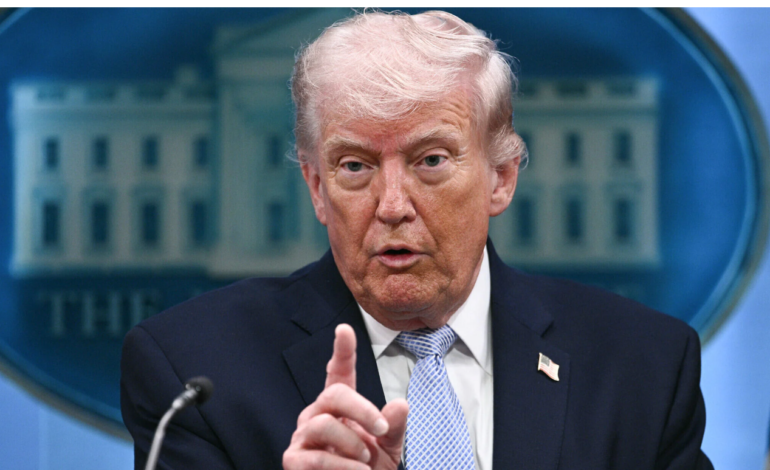
Trump suspends Iran bombing for two weeks as Tehran pushes 10-point proposal

U.S. President Donald Trump has announced a two-week suspension of bombing operations against Iran, opening a narrow window for diplomacy as Tehran advances a 10-point proposal outlining its conditions for de-escalation.
Trump said the decision followed discussions with Pakistani leaders, who have been mediating between Washington and Tehran. Pakistan has played a central role in facilitating dialogue and had urged both sides to adopt a temporary ceasefire to allow negotiations to move forward.
“I have agreed to suspend the bombing and attack of Iran for a period of two weeks,” Trump said, signaling a pause in military operations that have intensified in recent weeks.
Iran’s Supreme National Security Council confirmed that it has put forward a 10-point proposal to the United States as a framework for talks. Among the key elements of the proposal is the demand for recognition of Iran’s right to uranium enrichment, a longstanding point of contention in nuclear negotiations.
The proposed plan is expected to form the basis of upcoming discussions, with Pakistan set to host direct talks between U.S. and Iranian representatives. The negotiations are being closely watched as a potential turning point in the conflict, which has seen widespread airstrikes, missile exchanges, and rising regional instability.
Despite the pause in hostilities, both sides remain cautious. U.S. officials have indicated that the suspension is conditional and could be reversed if progress is not made or if Iran fails to meet certain expectations, including easing tensions around the Strait of Hormuz.
The strategic waterway has been a focal point in the conflict, with disruptions raising concerns over global oil supplies and shipping routes. Washington has repeatedly called for its reopening, while Tehran has resisted linking it to temporary ceasefire arrangements.
The announcement of the bombing suspension comes amid growing international pressure to de-escalate the situation. Several countries have urged restraint, warning that continued conflict could have far-reaching economic and security consequences.
Meanwhile, protests against U.S. military action have been reported in Washington, reflecting domestic divisions over the conflict. Critics have questioned the long-term strategy, while supporters argue that pressure on Iran is necessary to achieve a favorable outcome.
As both sides prepare for talks, the next two weeks are seen as critical in determining whether diplomacy can succeed or if hostilities will resume. The outcome of the negotiations could shape the trajectory of the conflict and broader regional stability.