US naval blockade on Iranian ports lifted ahead of landmark agreement, says Tehran

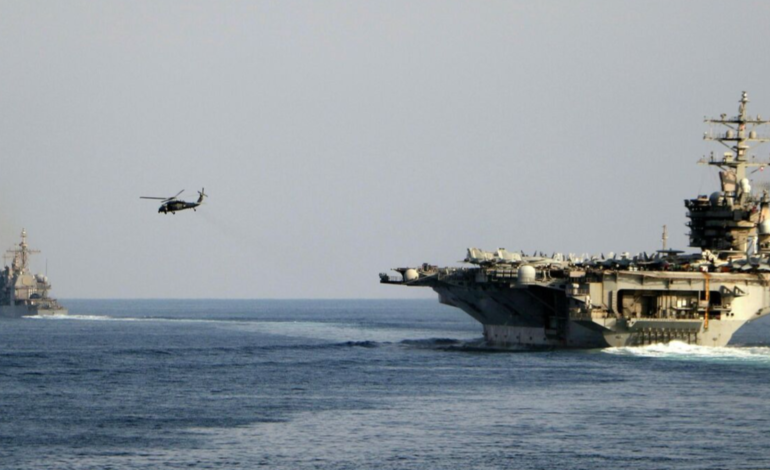
Iran’s Deputy Foreign Minister Majid Takht-Ravanchi has announced that the United States has lifted the naval blockade imposed on Iranian ports, a move that comes ahead of the formal signing of a memorandum of understanding (MoU) between the two countries scheduled for Friday in Switzerland.
According to Takht-Ravanchi, the lifting of the blockade marks a significant confidence-building measure and reflects one of Tehran’s key demands during negotiations.
“The lifting of the blockade was something we had emphasized from the beginning. Now it has begun, and the blockade has been lifted before the formal signing of the agreement,” he said, according to reports carried by the Adnkronos news agency.
Iranian media reported on Monday that three oil tankers and two vessels carrying essential goods successfully entered Iranian ports after breaching the blockade, signaling an early easing of maritime restrictions.
The development follows a broader diplomatic breakthrough announced during the G7 Summit in Evian, France, where U.S. President Donald Trump and French President Emmanuel Macron praised a newly reached agreement with Iran aimed at reducing tensions in the Middle East.
Macron described the agreement as a major step toward resolving concerns over Iran’s nuclear program and promoting regional stability. He also expressed hope that the deal would contribute to peace efforts in Lebanon and encourage wider international cooperation.
Trump stated that the agreement was already producing tangible results, including the gradual reopening of the Strait of Hormuz, one of the world’s most strategically important energy shipping routes.
“The Strait is already partially opened. Ships are starting to move again, and by Friday it will be completely opened,” Trump said.
The reopening of maritime routes is expected to help stabilize global energy markets, ease shipping disruptions, and reduce uncertainty across the Gulf region. Analysts believe the agreement could mark a significant turning point in U.S.-Iran relations while improving regional security and trade flows.