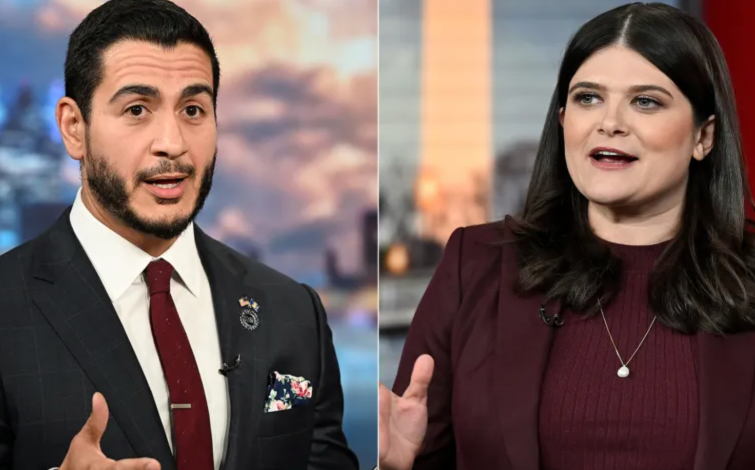
US midterms: Democrats rally behind Abdul El-Sayed as Michigan race faces last-minute controversy

With just one day remaining before the US midterm elections, Democratic leaders are rallying behind Michigan Senate candidate Abdul El-Sayed following a political controversy involving Democratic Congresswoman Haley Stevens, who has endorsed Republican candidate Mike Rogers instead of her party’s nominee.
The November 3 elections will determine control of the US Congress, with Republicans currently holding majorities in both chambers. Democrats are seeking to regain control of the House of Representatives and Senate, while campaigning has intensified across key battleground states.
The Michigan Senate contest has emerged as a significant point of division within the Democratic Party. Stevens, who lost the Democratic Senate primary to El-Sayed in August, announced her support for Rogers on Sunday, November 1.
Her decision followed weeks of disagreement with El-Sayed over US policy towards Israel. El-Sayed has opposed military assistance to Israel and criticised Prime Minister Benjamin Netanyahu’s role in the conflict involving Iran. Stevens, meanwhile, has accused El-Sayed of antisemitism over his criticism of Israeli government actions in Gaza.
El-Sayed has urged voters not to support Rogers, arguing that electing the Republican would strengthen President Donald Trump’s political agenda.
Democratic leaders criticise Stevens’ endorsement
Stevens’ decision drew criticism from senior Democrats, who reaffirmed their support for El-Sayed.
Michigan Democratic Party Chairman Curtis Hertel said Stevens did not represent the broader Democratic community in the state.
Senate Democratic leader Chuck Schumer also condemned her endorsement, describing it as a betrayal and expressing confidence in El-Sayed’s commitment to working families.
The advocacy organisation Michigan Jews for Democracy also backed El-Sayed, rejecting Stevens’ suggestion that her position represented Michigan’s Jewish community.
The controversy has brought renewed attention to divisions within the Democratic Party over US support for Israel and the broader Middle East conflict.
President Trump welcomed Stevens’ endorsement of Rogers during a campaign rally in Iowa. He praised her decision and said he would welcome her joining the Republican Party.
The immediate question is whether Stevens’ endorsement will influence her former supporters or affect voter turnout in the closely watched Michigan contest. Reuters-reported polling indicated that El-Sayed had largely consolidated Democratic support.
Alaska Senate race faces legal controversy
Another election-related development emerged in Alaska, where a federal judge dismissed a Trump administration lawsuit seeking to prevent the state from certifying an election result that could show Republican Senator Dan Sullivan losing.
The administration had argued that another candidate with the same name on the ballot could affect the outcome.
Sullivan subsequently said he would accept the election results, regardless of the outcome. Alaska is among the closely watched Senate contests that could influence control of the upper chamber.
More than 54 million Americans have voted early
Early voting has also reached substantial levels across the country.
According to a University of Florida analysis cited by Al Jazeera, approximately 54.5 million Americans had voted early by 10 a.m. Eastern time on Sunday, November 1. The figure included around 30 million in-person votes and 24 million mail-in ballots.
By comparison, approximately 46 million people voted early during the 2022 midterm elections.
Early voting participation among registered Democrats was higher than among registered Republicans in the reported figures, with more than 11 million Democrats and approximately eight million Republicans having cast ballots.
Texas recorded more than 7.7 million early votes, while Michigan, Kansas and Maine also reported increased participation.
However, early voting figures do not reveal candidate preferences or determine the eventual election results.
Key elections on November 3
All 435 seats in the House of Representatives and 35 of the Senate’s 100 seats are being contested. Voters will also elect governors in 36 states.
The cost of living, inflation, immigration, foreign policy and the US-Israel war involving Iran have featured prominently in the campaign.
The results will determine whether Trump continues working with a Republican-controlled Congress or faces a Democratic majority with greater authority to scrutinise his administration during the remaining two years of his presidency.
With campaigning entering its final hours, the Michigan Senate contest and several closely watched Senate races remain important parts of the national political debate.