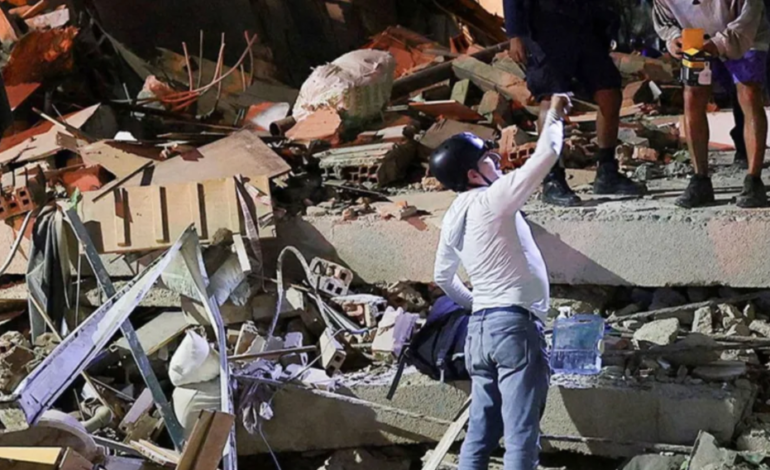
Venezuela twin earthquakes kill at least 164, nearly 1,000 injured

Venezuela is facing one of its worst natural disasters in more than a century after two powerful earthquakes struck the country within minutes, leaving at least 164 people dead and 971 injured. Authorities continue rescue and relief operations as communities across the South American nation struggle to recover from the widespread destruction.
The twin earthquakes, measuring magnitudes 7.1 and 7.5, struck on June 24 and were among the strongest tremors recorded in Venezuela in over 100 years. The quakes caused significant damage in the capital city of Caracas, where buildings collapsed, roads cracked, and critical infrastructure was disrupted.
Interim President Delcy Rodríguez confirmed the casualty figures and announced that emergency services had been mobilized nationwide. Search-and-rescue teams are working around the clock to locate survivors trapped under debris, while medical personnel continue treating hundreds of injured residents.
The impact of the disaster extended far beyond Venezuela’s borders. The tremors were felt across neighboring countries and even reached parts of Brazil’s Amazon region, nearly 1,700 kilometers from Caracas. The powerful shaking prompted evacuations in several cities and raised concerns about regional infrastructure safety.
One of the most significant disruptions occurred at Simón Bolívar International Airport near Caracas, which suffered damage and was temporarily closed. Venezuelan authorities also suspended school classes for several days, with some educational institutions being converted into temporary shelters and donation centers for affected families.
Governments from across the Americas, including the United States, Brazil, Argentina, Chile, Mexico, Ecuador, Panama, Bolivia, El Salvador, and Uruguay, have offered assistance and expressed solidarity with Venezuela. Humanitarian aid and emergency response support are expected to play a crucial role in recovery efforts.
As rescue operations continue, officials warn that the death toll could rise further while assessments of structural damage and humanitarian needs remain ongoing.