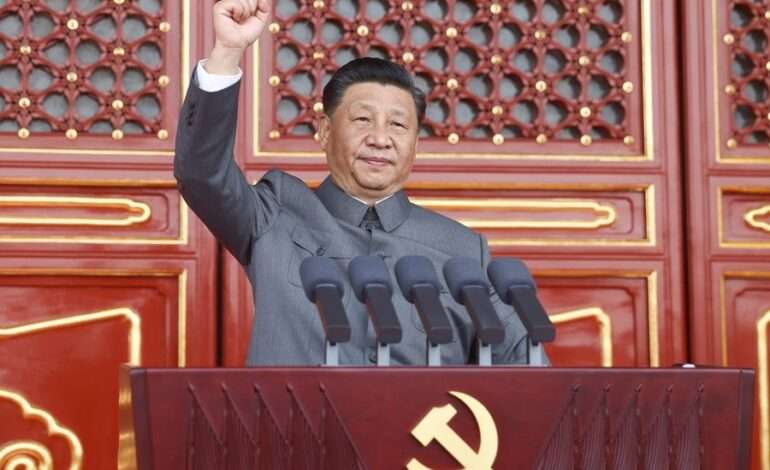
Xi Jinping’s anti-corruption campaign seen as tool for political survival and control

The detention of Liu Jianchao, one of China’s most prominent diplomats, has underscored how President Xi Jinping’s anti-corruption campaign has shifted from fighting graft to ensuring political control and survival, according to a report in Sri Lanka’s Daily Mirror.
Liu, head of the Communist Party’s International Liaison Department and once considered a top contender for foreign minister, was taken into custody earlier this month. His sudden disappearance shocked Beijing’s diplomatic establishment. Analysts say Liu’s fall marks a turning point, showing that Xi’s anti-corruption efforts now extend to areas once thought insulated, such as foreign policy.
Liu was not only a polished diplomat educated at Oxford but also an insider trusted to oversee “Operation Fox Hunt,” which tracked fugitives abroad. Ironically, a man who once pursued corrupt officials has now been pursued by the very system he served. His detention follows the unexplained disappearance of former foreign minister Qin Gang in 2023, further signaling that China’s diplomatic corps is no longer immune from internal purges.
The Daily Mirror report argues that Xi’s campaign has evolved into a governance mechanism rooted in fear, unpredictability, and loyalty to him personally. Technical competence or past service no longer guarantee safety within the Communist Party hierarchy. Instead, constant demonstrations of political obedience are required for survival.
Critics warn the campaign destabilizes trust among Party elites, but analysts suggest this is intentional. By keeping even senior diplomats insecure, Xi ensures that loyalty to him outweighs institutional norms, strengthening his grip on power while reshaping governance into a system based on fear and compliance.